

Top 5 Causes of MV Switchgear Failure and How to Prevent Them
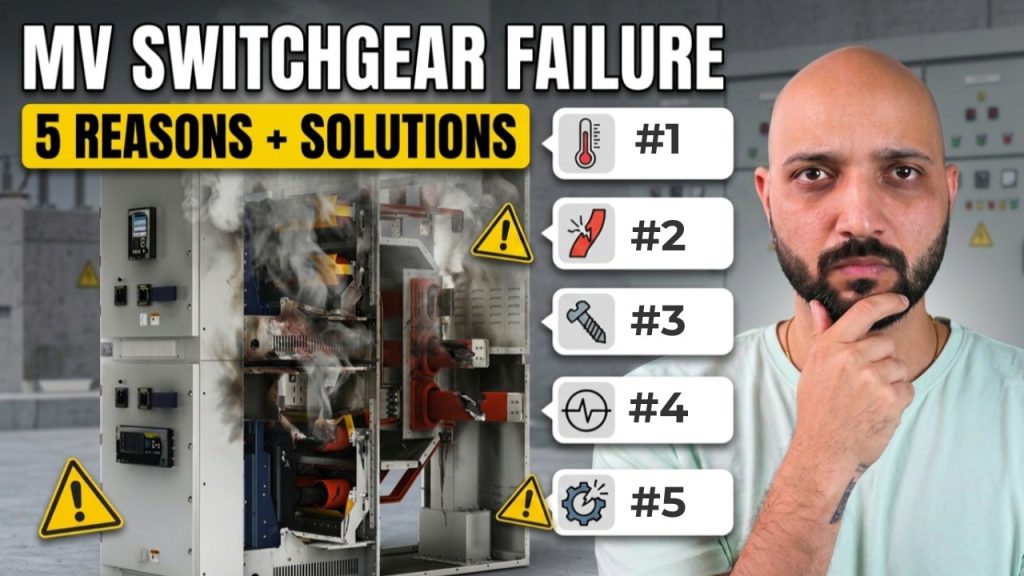
Top 5 Causes of MV Switchgear Failure and How to Prevent Them https://www.theelectricalguy.in/wp-content/uploads/2026/05/maxresdefault-1-1-1024x576.jpg 1024 576 Gaurav Joshi https://secure.gravatar.com/avatar/f6a3006f3f7233a71d79d0e705c167ae12516870e5239627478665ae377435b3?s=96&d=mm&r=gImagine your 36kV medium voltage switchgear operating continuously for two years. The breaker remains closed the entire time because no fault occurs in the system. Everything appears normal. Current flows properly and there are no visible issues.
Then suddenly a question comes to mind. What will happen if a fault occurs now? Will the breaker trip properly or not? Since the breaker remained closed for years, several hidden problems may already exist inside the panel.
This is exactly why understanding MV switchgear failure becomes very important. A failure inside switchgear can create major operational and safety risks if not detected early.
Table of Contents
- Understanding Major and Minor MV Switchgear Failure
- Insulation Failure and Partial Discharge
- Internal Arc Faults in MV Switchgear Failure
- Busbar and Connection Overheating
- Environmental and Aging Effects
- Mechanical Failure in Medium Voltage Switchgear
- Conclusion
Understanding Major and Minor MV Switchgear Failure
Before discussing the failure reasons, it is important to understand what actually qualifies as a failure. Not every small issue inside switchgear becomes a major failure. IEC 62271-1 already defines this clearly.
A major failure happens when the switchgear loses one or more core functions. These core functions include:
- Switching
- Protection
- Monitoring
- Control
For example, suppose a fault occurs but the protection system fails completely. That immediately becomes a major failure. Similarly, if the breaker receives a trip command but does not open, the switching function fails. That also qualifies as a major failure.
The IEC definition also explains another important point. If the system condition changes immediately because of the failure, then it becomes a major failure.
For example:
- Backup protection operates because primary protection failed
- Supply shifts from one busbar to another
- Breaker requires immediate removal from service
All these conditions qualify as major failures.
Minor failures are different. These failures do not affect the core functionality of switchgear. For example, an indication lamp failure becomes a minor issue because the protection and switching functions still remain healthy.
Industry reports mainly focus on major failures because they directly affect system reliability and safety.
1. Insulation Failure and Partial Discharge
Insulation failure contributes almost 20% to 30% of total switchgear failures. One of the biggest reasons behind insulation failure is partial discharge.
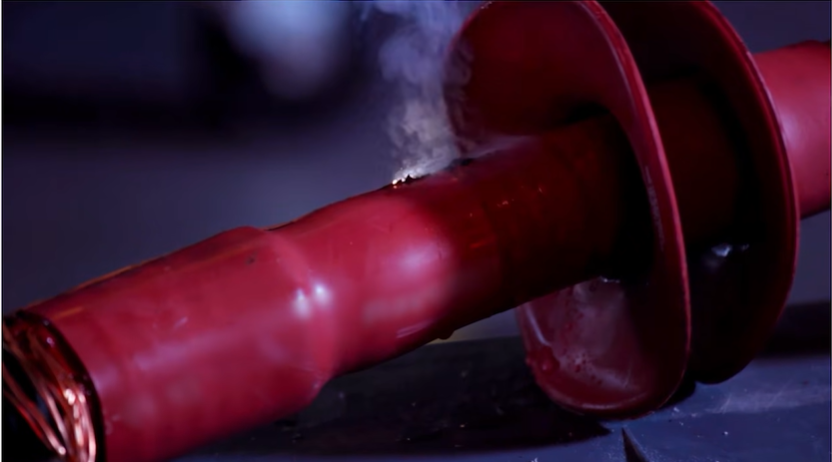
Partial discharge is extremely dangerous because it usually gives no visible warning signs. In many cases, engineers only notice the problem after a fire or arc fault occurs.
In simple terms, partial discharge develops because of impurities or small voids inside insulation material. Electrical stress starts concentrating around those weak areas. Over time, the dielectric strength weakens further and discharge begins internally.
This process behaves like termites inside a wooden beam. From outside, everything looks healthy. However, internally the structure becomes weaker every day.
Partial discharge commonly occurs in:
- Cable terminations
- CT insulation
- VT insulation
- Busbar insulation systems
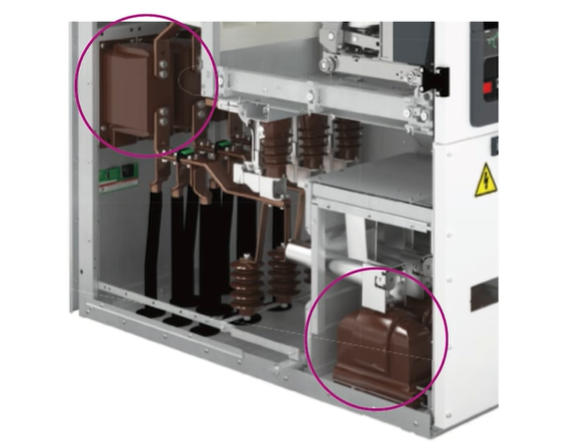
Improper cable termination also becomes a major cause of insulation problems.
Studies show that almost 26% of insulation failures occur because of partial discharge. Therefore, monitoring becomes extremely important.
Modern switchgear now includes partial discharge monitoring systems. These systems continuously monitor insulation condition and provide early warning signs before complete failure occurs.
Periodic maintenance testing is another option. However, maintenance only checks the system during inspection periods. Monitoring works continuously and provides real-time information.
That is the major difference between maintenance and monitoring.
2. Internal Arc Faults in MV Switchgear Failure
Internal arc is one of the most dangerous failures inside medium voltage switchgear. This problem directly affects both equipment safety and human safety.
Internal arc is not the same as a normal short circuit. It usually develops because of insulation breakdown or accidental bridging between phases.
Common causes include:
- Insulation failure
- Loose connections
- Foreign objects inside panels
- Human maintenance mistakes
For example, a screwdriver left inside the panel can accidentally bridge two phases and create internal arc.
The consequences become catastrophic because internal arc generates:
- Extremely high temperature
- Intense pressure
- Dangerous smoke
- Fire hazards
Modern systems now use arc detection systems for protection. These systems detect both light and current generated during arc conditions. Once detected, the breaker trips within milliseconds.
Engineers should also check whether the switchgear includes proper internal arc classification ratings because this directly affects operator safety.
3. Busbar and Connection Overheating
Every electrical joint carries some level of risk if not installed properly. Poor workmanship increases resistance at connection points. Higher resistance increases I²R losses, which eventually increases temperature.
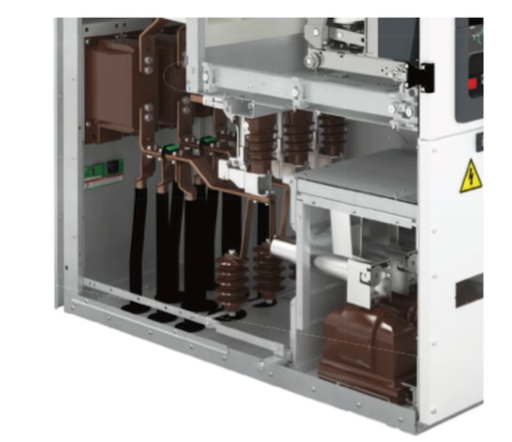
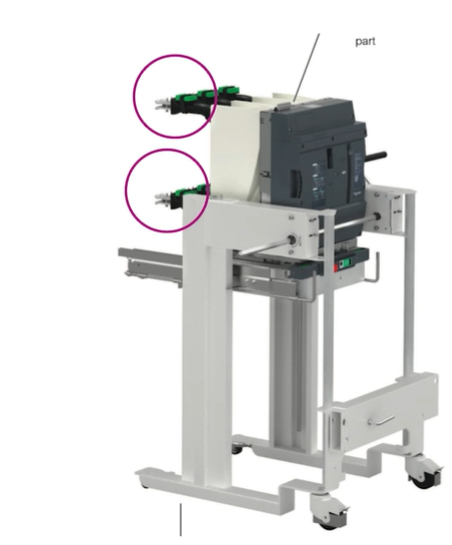
If the temperature rises beyond safe limits, overheating may lead to fire or arc faults.
Common overheating locations include:
- Busbar joints
- Cable terminations
- Breaker contacts
- Earthing connections
Withdrawable breakers especially require proper contact alignment. If contacts are not seated correctly, overheating may develop rapidly.
Workmanship quality plays a major role here. Proper tightening methods and manufacturer guidelines must always be followed.
Modern switchgear now uses thermal monitoring systems. Sensors monitor temperature continuously and provide real-time alerts if temperature rises abnormally.
These systems become extremely useful in large plants containing hundreds of panels because manual thermal inspection becomes difficult.
4. Environmental and Aging Effects
Aging affects electrical equipment just like it affects any other system. Medium voltage switchgear generally operates for around 25 to 30 years. Beyond that period, the risk level increases significantly.
Aging can create:
- Insulation cracking
- Corrosion
- Seal failure
- Moisture ingress
- Material degradation
Circuit breaker contacts may also wear out over time. As a result, breakers may fail during actual fault conditions.
Environmental conditions also contribute heavily to failures. Studies show that nearly 30% of busbar failures happen because of moisture. Around 19% occur because of dust contamination.
Moisture and dust can become conductive under certain conditions. Once conductivity increases, insulation gaps become vulnerable.
To reduce these risks, engineers should:
- Perform regular maintenance
- Use higher IP-rated panels where needed
- Select GIS or solid insulation systems in harsh environments
- Install humidity and environmental monitoring sensors
Continuous monitoring helps identify problems before failure occurs.
5. Mechanical Failure in Medium Voltage Switchgear
Mechanical failure contributes almost 30% to 40% of total switchgear failures. This becomes the largest contributor among all failure reasons.
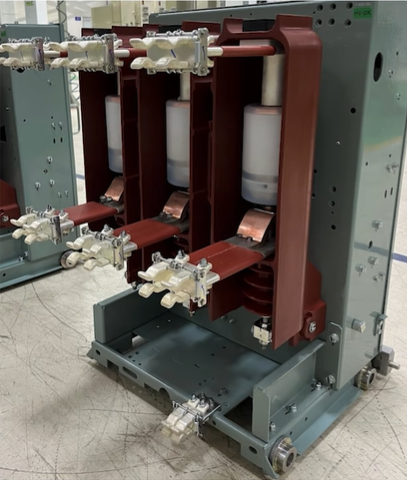
Imagine the protection system detects a fault correctly. It sends a trip command to the breaker immediately. However, the breaker still refuses to open because the operating mechanism failed mechanically.
This situation becomes extremely dangerous.
Common mechanical failure causes include:
- Trip coil failure
- Improper lubrication
- Seized operating mechanism
- Loss of stored spring energy
- Worn-out breaker components
Trip coils are especially critical because they directly activate the breaker mechanism. If the trip coil fails completely, the breaker cannot operate.
Lubrication also becomes important. If lubrication dries out over time, contamination may develop inside the mechanism. Eventually the mechanism becomes stuck.
If the breaker fails during a fault, huge short circuit current may continue flowing through the system. This can create:
- Severe equipment damage
- Production shutdown
- Arc flash incidents
- Human safety risks
Modern breaker monitoring systems now help prevent these problems. These systems continuously monitor:
- Breaker contacts
- Gas pressure
- Opening speed
- Closing speed
- Operating mechanism condition
If breaker operating speed reduces, it may indicate internal mechanical problems requiring immediate inspection.
Condition-based monitoring therefore becomes much more effective than waiting for failure to occur.
Conclusion
MV switchgear failure can occur because of insulation issues, internal arc faults, overheating, environmental effects, or mechanical failures. Many of these failures develop slowly and silently over time.
Traditional maintenance alone is no longer enough for modern systems. Industries now need continuous monitoring and condition-based maintenance to improve reliability.
Early detection helps prevent catastrophic failures, downtime, and safety incidents. Modern monitoring systems already provide practical solutions for most of these problems.
For a clearer and more practical understanding, it is recommended to watch the full video explanation.

