


What is Electrical Power Quality and Why it Matters in Power Systems
What is Electrical Power Quality and Why it Matters in Power Systems https://www.theelectricalguy.in/wp-content/uploads/2026/04/maxresdefault-5-1024x576.jpg 1024 576 Gaurav Joshi https://secure.gravatar.com/avatar/f6a3006f3f7233a71d79d0e705c167ae12516870e5239627478665ae377435b3?s=96&d=mm&r=gYou often hear about quality in products and services. However, what about the quality of electricity? This is where electrical power quality becomes important.
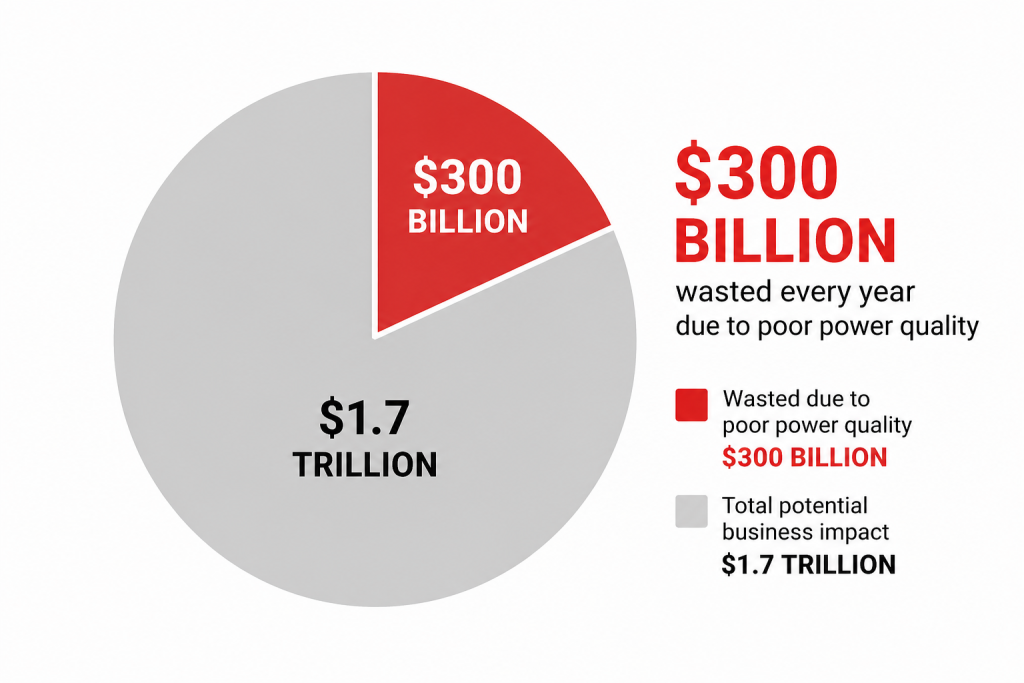
Poor electrical power quality is not a small issue. Studies show that businesses across the world lose around $300 billion every year due to poor power quality.
So, understanding this concept is essential. It helps you protect equipment and avoid major financial losses.
Table of Contents
- What is Electrical Power Quality
- Why Electrical Power Quality is Important
- Electrical Power Quality is Equal to Voltage Quality
- Causes of Poor Electrical Power Quality
- Common Electrical Power Quality Issues
- Conclusion
What is Electrical Power Quality
To understand, think of a car that runs on petrol. If you use clean fuel, the car runs smoothly. However, if you mix water with petrol, problems begin.
Similarly, electrical equipment needs proper input. For example, an induction motor needs a specific voltage and waveform. If the waveform changes, the motor may overheat or fail.
This situation defines electrical power quality. It refers to deviations in voltage, current, or frequency that affect equipment performance.
A simple definition makes it clear. Electrical power quality is any deviation in voltage, current, or frequency that causes equipment failure or malfunction.
Why Electrical Power Quality is Important
Power quality is important for both customers and utilities. Let us first understand the customer side. In industries, poor power quality can stop production. Machines may overheat or fail. Restarting processes can take 3 to 4 hours, which leads to major losses.
Data centers face even bigger risks. Studies show they can lose more than $8,000 per minute during downtime caused by poor power quality.
Retail businesses also suffer. If refrigeration fails, stored products get damaged. This results in direct financial loss.
In critical areas like hospitals, the impact becomes serious. Equipment failure due to poor power quality can even risk human life.
Now look at the utility side. Utilities must maintain good power quality to keep customers. With increasing competition, customers can easily switch providers. So, maintaining electrical power quality is essential for both sides.
Electrical Power Quality is Equal to Voltage Quality
A key concept is that electrical power quality mainly relates to voltage quality. This idea is very important.
Utilities control voltage, not current. The current depends on the load, which is controlled by the customer.
Therefore, most standards focus on voltage quality. The ideal condition includes:
- Proper voltage magnitude
- Pure sine waveform
- Rated frequency such as 50 Hz or 60 Hz
If any of these change, power quality issues arise.
However, current can still affect voltage in some cases. For example, short circuit faults create very high current. This can cause voltage to drop completely for a short time.
Lightning strikes also disturb voltage levels. So, while voltage is the main focus, current can also influence electrical power quality.
Causes of Poor Electrical Power Quality
Several factors lead to poor power quality in real systems. These causes may come from both the utility side and the customer side.
- Switching of large loads:
When large motors or inductive loads switch on or off, voltage imbalance occurs in the system. - Lightning strikes:
Sudden lightning events create voltage disturbances and can disrupt system stability instantly. - Short circuit faults:
Fault conditions cause very high current flow, which leads to voltage drop or complete interruption. - Unbalanced loads:
When phases carry unequal loads, it results in voltage imbalance across the system. - Momentary power loss:
Short interruptions from the utility side can affect equipment operation and system continuity. - Capacitor bank switching:
Charging and discharging of capacitor banks create voltage disturbances and transient effects. - Nonlinear loads:
Devices like UPS systems and chargers cause continuous switching, leading to waveform distortion.
Most of these causes originate at the customer side. Therefore, maintaining good electrical power quality requires joint effort from both users and utilities.
Common Electrical Power Quality Issues
Different causes of poor power quality result in various system issues. Each issue impacts equipment performance in a different way.
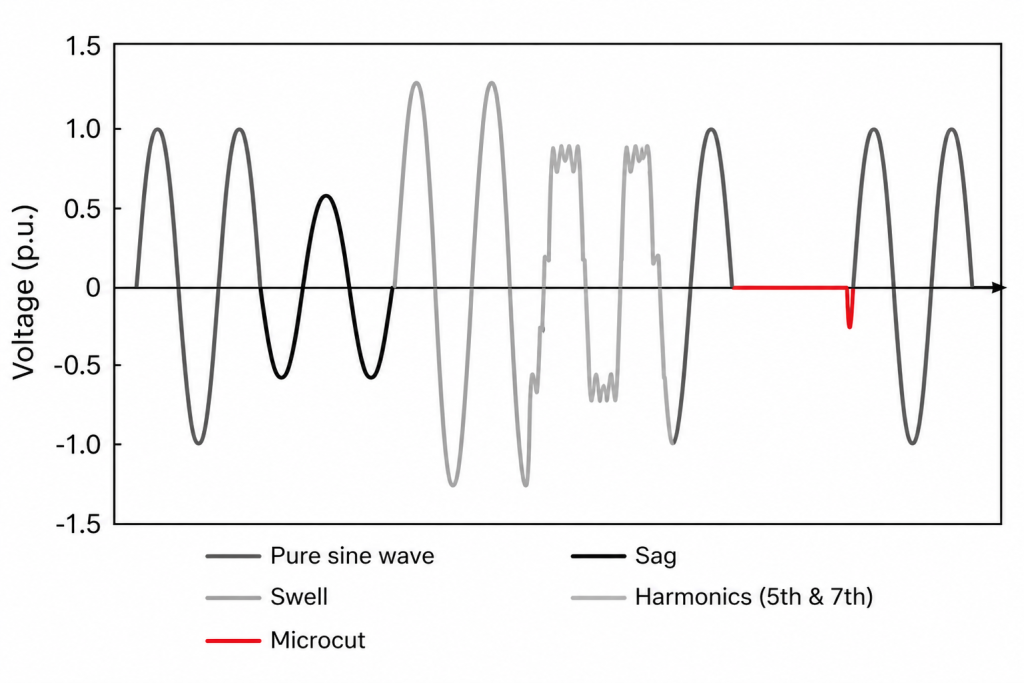
- Voltage sag: A temporary drop in voltage that can disturb equipment operation and cause malfunction.
- Voltage swell: A temporary rise in voltage that can stress electrical components and reduce their life.
- Harmonics: Distortion in waveform that affects sensitive devices and reduces system efficiency.
- Interruptions (micro cuts): Complete loss of voltage for a short time, which can stop operations instantly.
- Voltage spikes: Sudden high voltage peaks that can damage equipment and insulation.
- Under voltage and over voltage: Improper voltage levels that reduce performance and shorten equipment lifespan.
- Voltage imbalance: Unequal voltage in phases that leads to uneven operation in three-phase systems.
- Flickering: Visible fluctuation in lighting caused by unstable voltage conditions.
- Frequency variation: Deviation from rated frequency that affects equipment designed for constant frequency.
- Poor power factor: Low efficiency in power usage, which can lead to penalties and higher losses.
All these issues highlight how critical electrical power quality is in real-world systems.
Conclusion
Electrical power quality plays a key role in system performance and safety. Even small deviations can cause major problems. Equipment may fail, and operations may stop.
Understanding the causes and issues helps you prevent these problems. It also improves system reliability and efficiency.
For a clearer and more practical understanding, it is recommended to watch the full video explanation.

