

Why Switchgear Control Circuits Use DC Instead of AC
Why Switchgear Control Circuits Use DC Instead of AC https://www.theelectricalguy.in/wp-content/uploads/2026/04/maxresdefault-1024x576.jpg 1024 576 Gaurav Joshi https://secure.gravatar.com/avatar/f6a3006f3f7233a71d79d0e705c167ae12516870e5239627478665ae377435b3?s=96&d=mm&r=gAlternating current powers almost everything around us today. Our homes run on AC supply, and industries depend on it for operations. Even power generation, transmission, and distribution use AC systems. Despite this, something interesting appears inside switchgear panels.
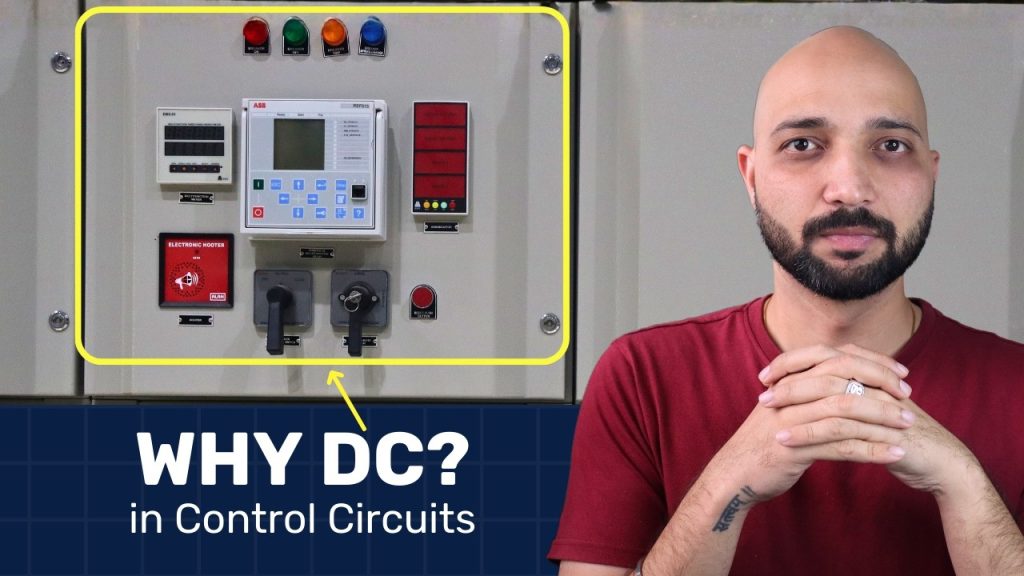
When you open the control or low voltage compartment, you will mostly find DC supply. The control circuits do not rely on AC in most cases. This creates a very important question.
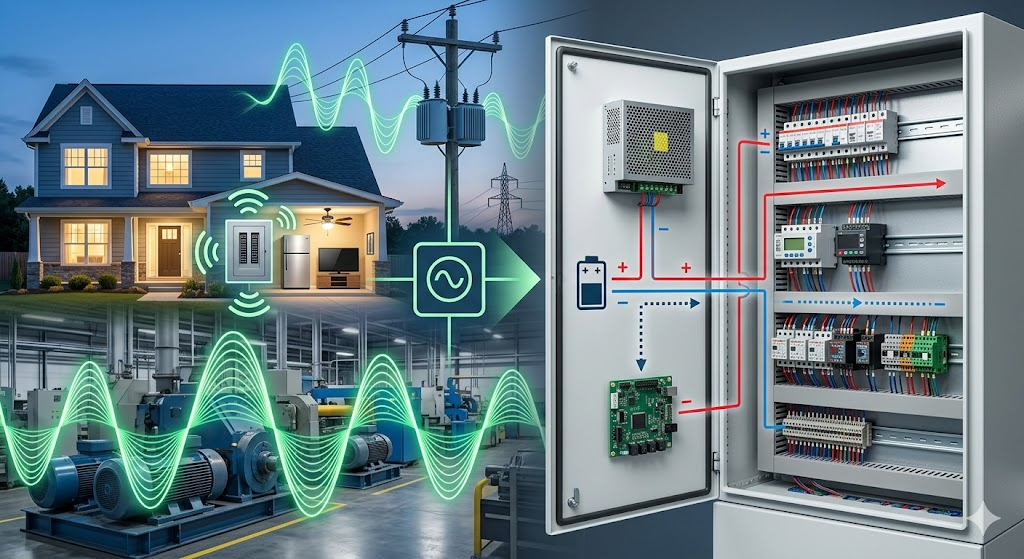
Why do we use DC in control circuits when the entire system runs on AC? Understanding Why Switchgear Control Circuits Use DC (Not AC) helps in both practical work and interviews.
This concept is also explained in detail in a circuit breaker control schematic masterclass. In that course, you learn how to read and interpret control schematics up to 800 kV systems.
Table of Contents
- Understanding the Role of Control and Power Circuits
- Simple Analogy to Understand the Concept
- Main Reason Why Switchgear Control Circuits Use DC (Not AC)
- Role of Battery Banks in Control Circuits
- Key Requirements of Control Circuits
- Why AC is Not Suitable for Control Circuits
- Standard DC Voltages Used in Switchgear
- Final Understanding of Why Switchgear Control Circuits Use DC (Not AC)
- Conclusion
Understanding the Role of Control and Power Circuits
Every electrical system works with two different voltage levels. One is the rated system voltage. The other is the auxiliary or control voltage. Both serve different purposes in the system.
The rated voltage defines the operating level of the system. For example, medium voltage switchgear may operate at different voltage ratings. On the other hand, auxiliary voltage powers control and protection circuits.
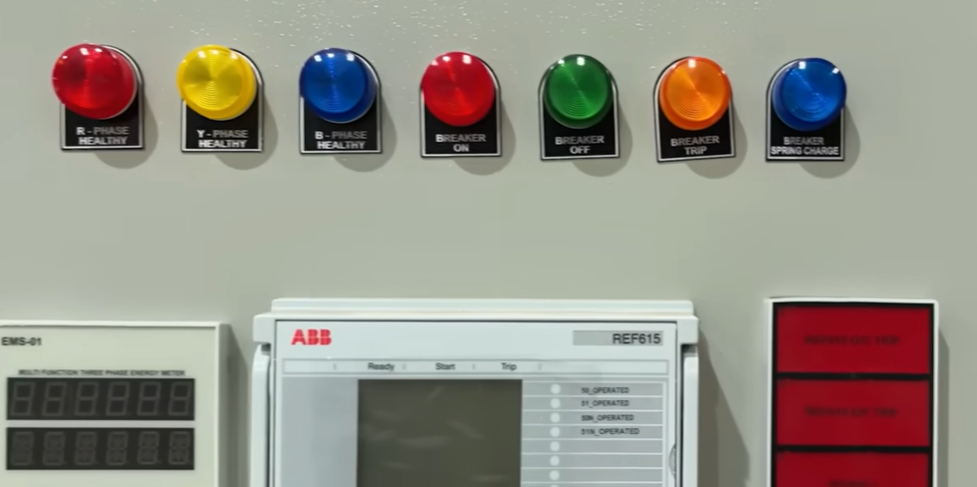
These voltage levels typically include:
- 12 kV, 24 kV, 36 kV, or 52 kV for system operation
- Much lower voltage for control circuits
Inside the panel, the system divides clearly into two parts. One handles power, while the other manages control.
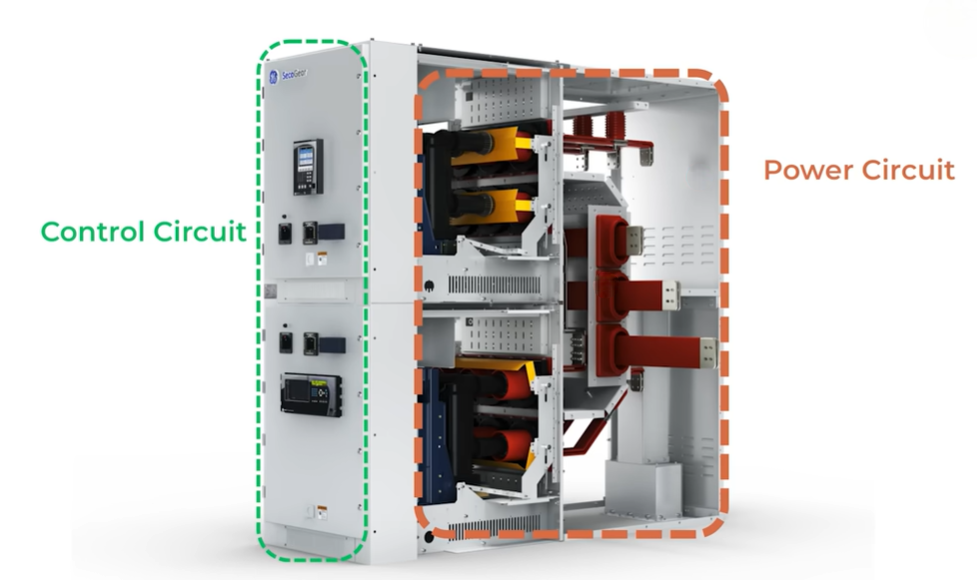
- Power circuit carries heavy current and high voltage
- Control circuit works with low voltage and signals
Because of this separation, control circuits need a different type of supply. This is where DC becomes important.
Simple Analogy to Understand Why DC is Used
To understand this concept better, let us consider a simple example. A car engine produces large mechanical power during operation. However, that same power does not start the engine itself.
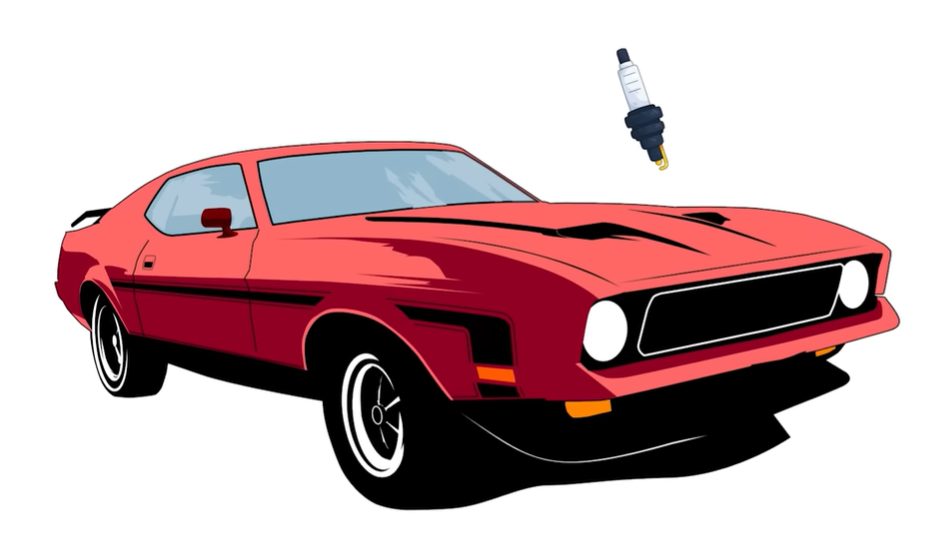
Instead, a small spark triggers the entire process. The spark plug provides a simple command. That small input activates a powerful system.
The same logic applies in electrical systems.
- Power circuits handle large loads
- Control circuits provide commands
- Small signals control large operations
This control happens through auxiliary circuits. These circuits use DC supply to ensure reliable operation.
Main Reason Why Switchgear Control Circuits Use DC (Not AC)
The biggest reason behind using DC is energy storage. DC can be stored easily, while AC cannot be stored directly. This makes a huge difference during fault conditions.
Let us consider a real scenario in a switchgear panel. Suppose a short circuit occurs in the system. During this fault, the current increases rapidly and the supply may collapse.
If control circuits depend on AC, they will lose power immediately. As a result, the protection system fails to operate. This can lead to serious damage in the system.
This situation can cause:
- Circuit breaker fails to trip
- Relay does not operate
- Fault current continues flowing
- Equipment damage or fire risk
However, DC supply solves this problem. DC is stored in battery banks, which provide backup power. Even if AC fails, DC remains available.
This ensures:
- Relay operates correctly
- Breaker receives trip command
- Fault clears safely
This is the strongest explanation for Why Switchgear Control Circuits Use DC (Not AC).
Importance of Battery Backup in Control Circuits
DC systems always include battery banks for backup. These batteries store energy and supply control circuits during emergencies. This ensures continuous operation of protection systems.
You will find battery systems in almost every installation. These systems support control circuits across different voltage levels.
Common applications include:
- Low voltage panels
- Medium voltage switchgear
- High voltage substations
Because of this setup, control circuits remain active even during power failure. This makes DC highly reliable for critical operations.
Key Requirements of Control Circuits
Control circuits must meet several important requirements. These requirements help ensure safe and reliable operation of the system.
First, control circuits must operate during power failure. Fault clearing is critical, and the breaker must trip under all conditions. Only DC can ensure this because it remains available through batteries.
Second, control circuits need instant response and stable supply. Circuit breakers use coils for operation. These coils require steady voltage to function properly.
Key requirements include:
- Operation during power failure
- Instant response of control signals
- Stable and steady voltage supply
Another important requirement is voltage stability. Relays are sensitive devices. Even small voltage fluctuations can affect their performance.
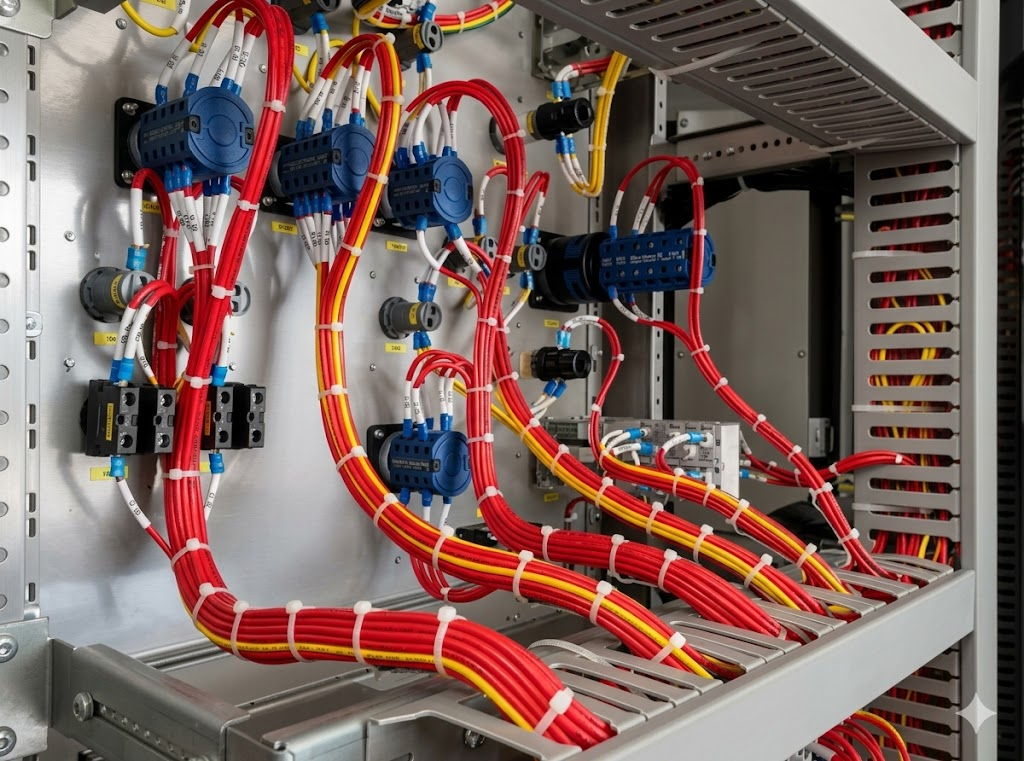
Additional requirements include:
- High voltage stability
- Compatibility with control components
- Minimal electromagnetic interference
Also, operator safety plays a major role. Control circuits use lower voltage levels to reduce risk. This makes the system safer during maintenance and operation.
Why AC is Not Suitable for Control Circuits
AC supply does not meet the requirements of control circuits effectively. It has several limitations when compared to DC. These limitations make AC unsuitable for control and protection systems.
AC cannot be stored easily, which is a major drawback. During faults, AC supply may fail completely. This interrupts the operation of control circuits.
Major limitations of AC include:
- No easy energy storage
- Voltage fluctuations
- Electromagnetic interference
- Unstable magnetic field in coils
Coils require a steady magnetic field to operate correctly. AC produces an alternating magnetic field, which is not suitable. This leads to improper operation of control devices.
Because of these issues, AC cannot provide reliable control performance.
Standard DC Voltages Used in Switchgear
DC supply in control circuits follows standard voltage levels. These values are defined by international standards such as IEC. These voltages ensure compatibility and safety across systems.
Different installations may use different DC voltage levels. However, some commonly used values remain consistent.
Standard DC voltages include:
- 24 V
- 48 V
- 60 V
- 110 V
- 125 V
- 220 V
- 250 V
These voltage levels are safe and effective for control circuits. They also support proper functioning of relays and other components.
Final Understanding of Why Switchgear Control Circuits Use DC (Not AC)
At this stage, the concept becomes clear and practical. Control circuits require reliability, stability, and continuous operation. These requirements cannot be fulfilled by AC supply.
DC provides all necessary features for control systems. It ensures operation during faults, supports stable performance, and protects equipment. This makes it the preferred choice in most installations.
Across the industry, DC dominates control circuits. It is used in more than 90% of electrical systems. This includes all levels of switchgear and substations.
This clearly explains Why Switchgear Control Circuits Use DC (Not AC) in modern electrical systems.
Conclusion
Understanding Why Switchgear Control Circuits Use DC (Not AC) is essential for every electrical engineer. It explains how protection systems remain active during faults. It also highlights the importance of stability and reliability in control circuits.
DC supply ensures safe operation, quick response, and proper functioning of equipment. AC, although widely used for power systems, cannot meet these critical requirements.
For a deeper and clearer understanding, it is recommended to watch the complete video explanation.

