

Self Healing Power Grid
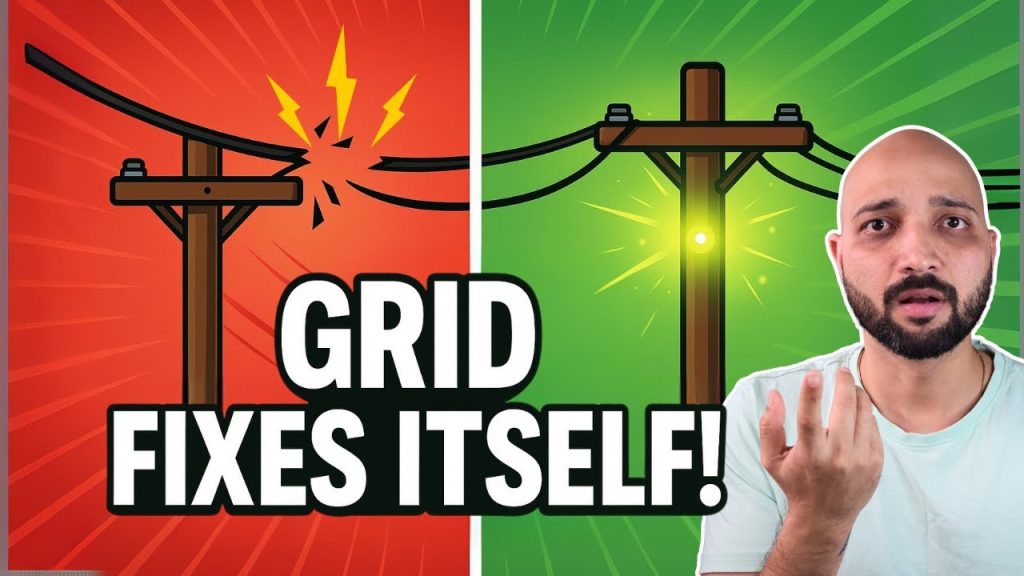
Self Healing Power Grid https://www.theelectricalguy.in/wp-content/uploads/2025/08/maxresdefault-1-1-1024x576.jpg 1024 576 Gaurav Joshi https://secure.gravatar.com/avatar/f6a3006f3f7233a71d79d0e705c167ae12516870e5239627478665ae377435b3?s=96&d=mm&r=gThe modern world cannot afford long power outages. Cities rely on electricity for almost every activity, from lighting homes to powering hospitals and transport systems. Even a short blackout can cause disruption, loss of productivity, and safety risks. To address this, a self healing power grid is designed to detect faults, isolate the problem, and restore supply automatically.

This process happens within seconds, without human intervention. At the center of this technology is a powerful device called the Remote Terminal Unit, or RTU, which acts as the brain behind fast fault detection and recovery.
What is a Remote Terminal Unit?
To understand RTUs, think of two towns separated by a river. They want to exchange goods but cannot do so directly. So, they build a bridge.
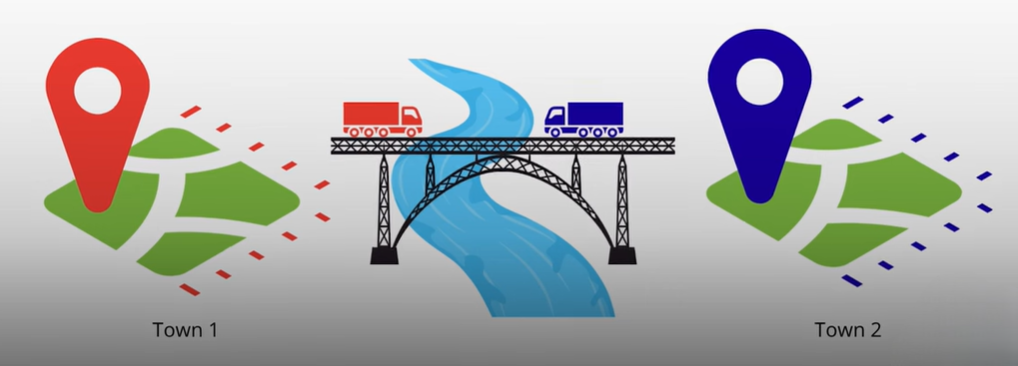
That bridge allows free movement between the two towns. In the power grid, one town is the Ring Main Unit (RMU) and the other is the control room where the SCADA system sits. The RTU acts as the bridge that connects both.
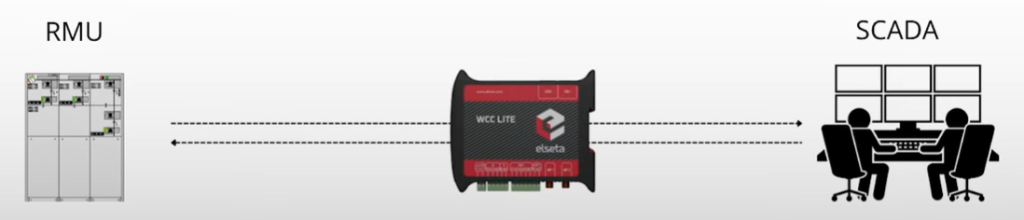
An RTU is a microprocessor-based device used in industrial automation. It connects field devices like sensors and actuators with central systems such as SCADA or DCS. From there, the RTU gathers data from equipment, processes it, and forwards the information to the control room. In addition, it can carry out commands from the control center, including opening or closing a breaker in the field.
RTUs vs PLCs
Many confuse RTUs with PLCs. Both control equipment, but they serve different roles.
- PLCs are best for local, high-speed automation. A factory conveyor belt, for example, runs smoothly under a PLC.
- RTUs are designed for remote locations. They excel in real-time monitoring and SCADA integration. A distribution switchgear located 100 kilometers away is an ideal case. It needs an RTU so the control room can monitor and control it instantly.

Without RTUs, engineers must physically visit the fault site. That wastes time. With RTUs, faults are handled remotely, saving hours and restoring power quickly.
How an RTU Works
At the heart of the RTU is its CPU. The CPU is the brain, handling both processing and communication.
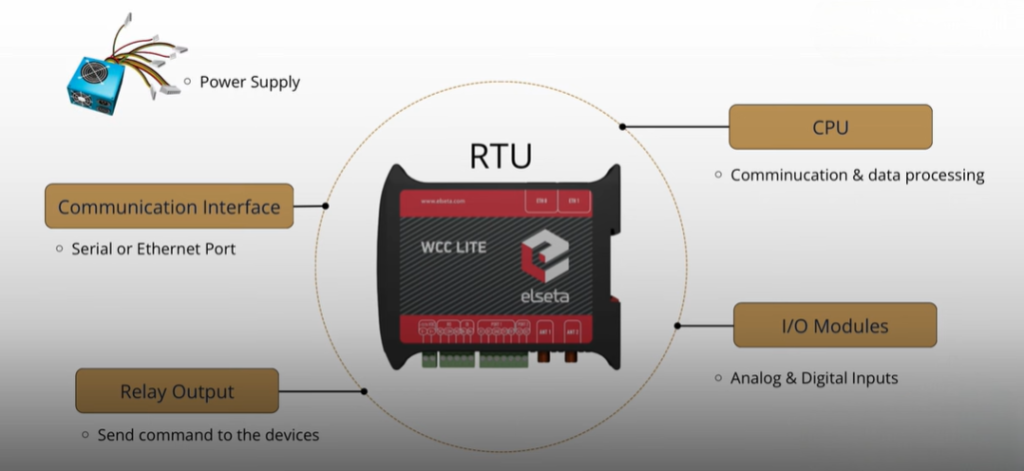
Other important parts include:
- Input modules – Analog inputs measure continuous values like voltage or temperature. Digital inputs detect on/off signals, like the position of a switch.
- Output modules – Relay outputs allow the RTU to send commands, like opening or closing a breaker.
- Communication interface – Enables the RTU to talk with SCADA using serial or Ethernet ports.
- Power supply – Typically 9 to 36 V DC, sometimes with backup batteries for reliability.
RTU Modules and Functions
RTUs come with modules to match project needs. Engineers can select the exact number of input and output points. They can expand later without replacing the unit. This makes RTUs flexible and cost-effective.
One special module is the Fault Passage Indicator (FPI). FPIs detect the type and even the direction of a fault. By pairing FPIs with RTUs, utilities can act immediately when faults occur.
Role of Sensors in Self Healing Power Grid
RTUs rely on data from sensors. For example, in an RMU, engineers can install temperature sensors, position indicators, and current or voltage monitors. These sensors send signals to the RTU. The RTU processes the data and forwards it securely to SCADA.
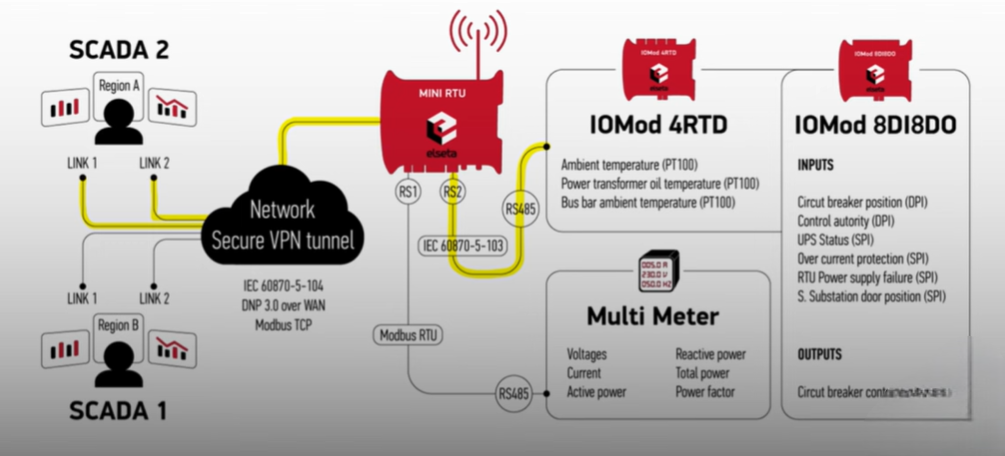
Modern RMUs paired with RTUs become fully controllable. Operators can:
- Read switch status.
- Trip a breaker.
- Detect faults with FPIs.
- Interface with SCADA using standard protocols like IEC 104 or IEC 61850.
Universal Application of RTUs
RTUs are not limited to RMUs. They can communicate with many devices, such as:
- Reclosers.
- Load break switches.
- Protection relays.
- Meters and analyzers.
- Solar inverters and sensors.
- Even other RTUs.

If an RMU already has smart devices, RTUs can integrate them through industry protocols. If not, utilities can retrofit existing RMUs with RTUs, making them smart and SCADA-ready.
Design and Integration Benefits
RTUs are compact and modular. This is crucial since many RMUs have limited space. Utilities can distribute modules across panels or keep everything within one small cabinet. Engineers can also expand inputs and outputs later without replacing the system.
This design focus makes RTUs practical for real-world use, where utilities value easy installation and integration.
How Self Healing Power Grid Works
A self healing power grid uses RTUs to detect and isolate faults, then restore power.
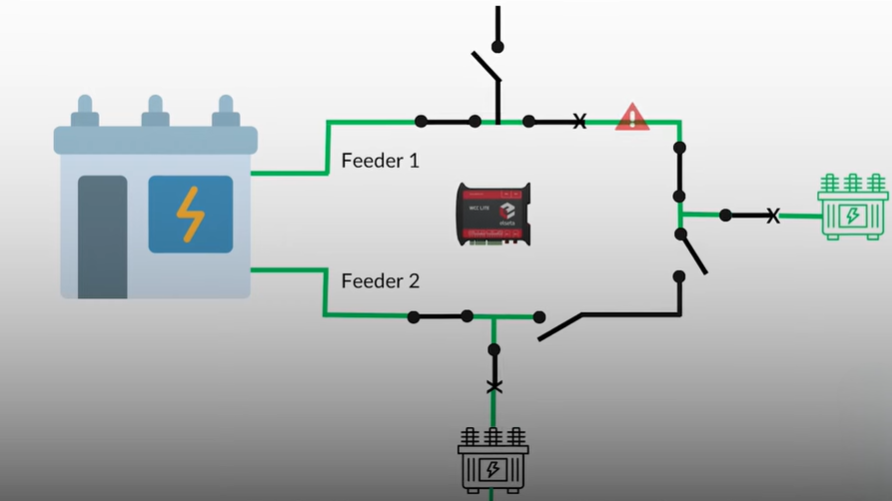
Here’s the sequence:
- A fault occurs, such as a tree branch touching a power line.
- The RTU detects it using FPIs.
- The RTU opens the nearest switch to isolate the faulty section.
- It then closes a tie-line switch from a neighboring feeder.
- Power is restored to unaffected areas within seconds.
- The control room sees the updated network status in real time.
This process shortens outage time and improves reliability. Utilities save manpower and meet performance targets.
Benefits of Self Healing Power Grid
- Fewer customers lose power during faults.
- Outages last for a much shorter time.
- Live load and power quality data stream to the control room.
- Operators can act before small issues grow.
- Utilities meet reliability standards and reduce penalties.
The self healing power grid turns distribution networks into smart, resilient systems.
RTUs as Protocol Gateways
RTUs act as universal gateways. They support all major grid protocols, such as:
- IEC 104.
- IEC 61850.
- DNP3.
- Modbus.
- MQTT and more.
This means any new intelligent device can connect to SCADA without extra hardware. Engineers only need to snap in new cards when more signals are required.
Cybersecurity in Self Healing Power Grid
Cybersecurity is vital. RTUs transmit sensitive data. If compromised, power systems could fail.
Modern RTUs include:
- TLS encryption.
- VPN support.
- Firewalls.
- Role-based access.
- Encrypted traffic for IEC 104, IEC 61850, and Modbus.
These features protect data in remote or exposed installations. Security is built into RTUs from the start, not added later.
Future of the Power Grid
A self healing power grid brings fewer interruptions, faster recovery, and improved quality for end users. For grid operators, it means better reliability performance and reduced risks during outages.
RTUs transform the traditional grid into a smarter and safer system. By combining automation, modularity, and cybersecurity, RTUs prepare the grid for future demands.
Conclusion
The self healing power grid is the future of reliable electricity. With RTUs as the backbone, grids can detect, isolate, and restore faults within seconds. They cut downtime, reduce costs, and improve user satisfaction. Cybersecurity ensures that data stays safe even in remote areas.
To get a complete visual understanding, watch the full video linked above. It explains each step in detail and shows how RTUs work in action.

