

What Are Harmonics in Electrical Systems?
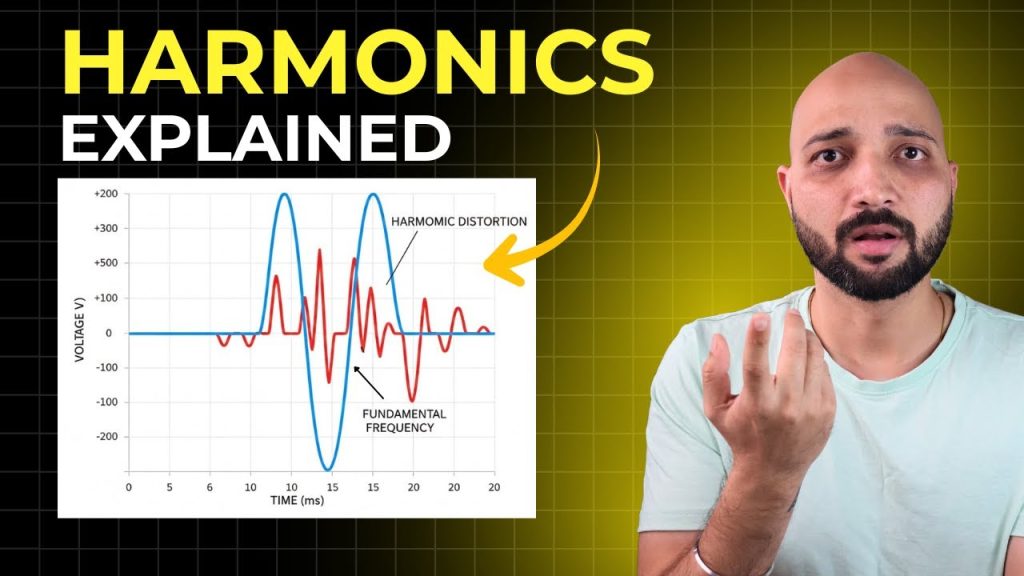
What Are Harmonics in Electrical Systems? https://www.theelectricalguy.in/wp-content/uploads/2026/02/maxresdefault-1-1024x576.jpg 1024 576 Gaurav Joshi https://secure.gravatar.com/avatar/f6a3006f3f7233a71d79d0e705c167ae12516870e5239627478665ae377435b3?s=96&d=mm&r=gHarmonics are present in almost every electrical system today. Even simple chargers produce harmonics. As we move toward industrial loads, harmonic levels increase further. The biggest impact of harmonics is not on utilities. Instead, customers suffer the most.
Today, harmonics are one of the biggest power quality issues. Many users face problems without understanding the reason. That is why learning the basics is important. In this article, we will explain what harmonics are, why they occur, and how they affect systems. The explanation is simple and practical. Let us begin with the basic concepts.
Table of Contents
- Basic Concepts Behind Harmonics in Electrical Systems
- What Are Harmonics in Electrical Systems
- Sources of Harmonics in Electrical Systems
- Harmonic Analysis Using Fourier Decomposition
- Harmonic Orders and Their Meaning
- How Harmonics Are Generated: A Practical Example
- Impact of Harmonics in Electrical Systems
- Harmonics vs Transients in Electrical Systems
- Special Types of Harmonics
- Summary of Harmonics in Electrical Systems
- Conclusion
Basic Concepts Behind Harmonics in Electrical Systems
Before understanding harmonics, three concepts are essential. These are frequency, waveform distortion, and nonlinear load. These ideas form the foundation of harmonic analysis.
Understanding Frequency in Electrical Systems
Frequency refers to the number of AC cycles per second. It shows how fast the alternating current changes direction. The unit of frequency is hertz.
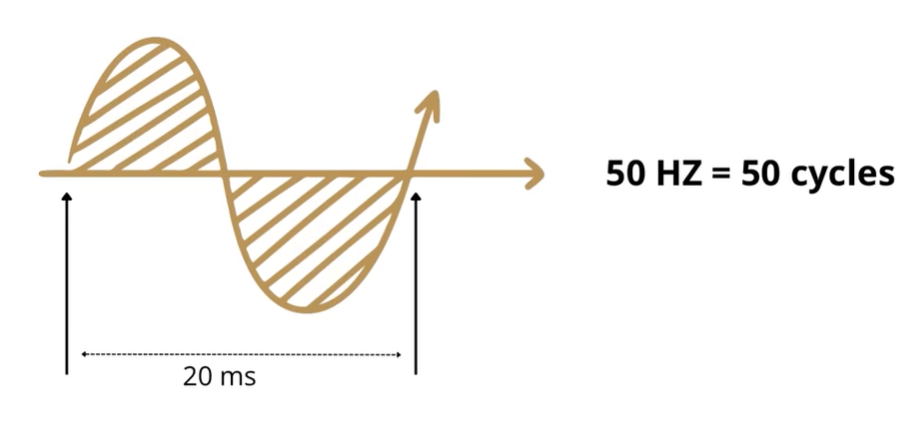
When we say 50 Hz, it means 50 cycles per second. One complete cycle includes one positive half and one negative half. Therefore, one cycle takes 20 milliseconds at 50 Hz. Some countries use 60 Hz instead. Both values are standard.
Frequency depends on generator speed. Synchronous machines control this speed. Today, many systems use inverters for solar and wind energy. Still, the output remains synchronized to system frequency.
The frequency used for generation, transmission, and distribution is called the fundamental frequency. Usually, this is 50 Hz or 60 Hz. Any other frequency is not fundamental unless the system is designed differently.
Distorted Waveforms and Their Meaning
In ideal conditions, generators produce a sine wave. This sine wave is the pure form of AC voltage. It represents stable and clean power. However, real systems often face disturbances. When voltage or current no longer looks like a sine wave, distortion occurs. This is called waveform distortion.
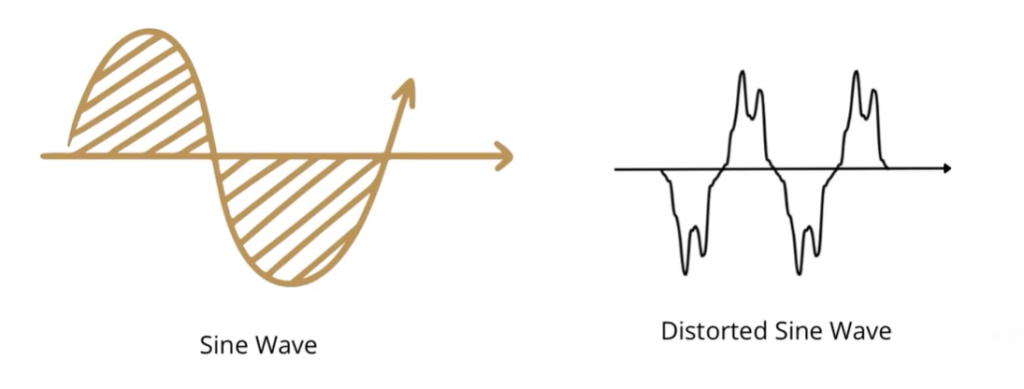
Distorted waveforms can take many shapes. They may look square, triangular, or irregular. These shapes depend on the source of disturbance. Whenever the waveform is not sinusoidal, it is considered distorted.
Nonlinear Loads and Their Role
Some loads draw current proportional to voltage. Examples include heaters and lamps. These loads are called linear loads. Their current waveform remains sinusoidal. However, many modern devices behave differently. Variable frequency drives, converters, and electronic equipment draw current in pulses. They do not draw smooth current.
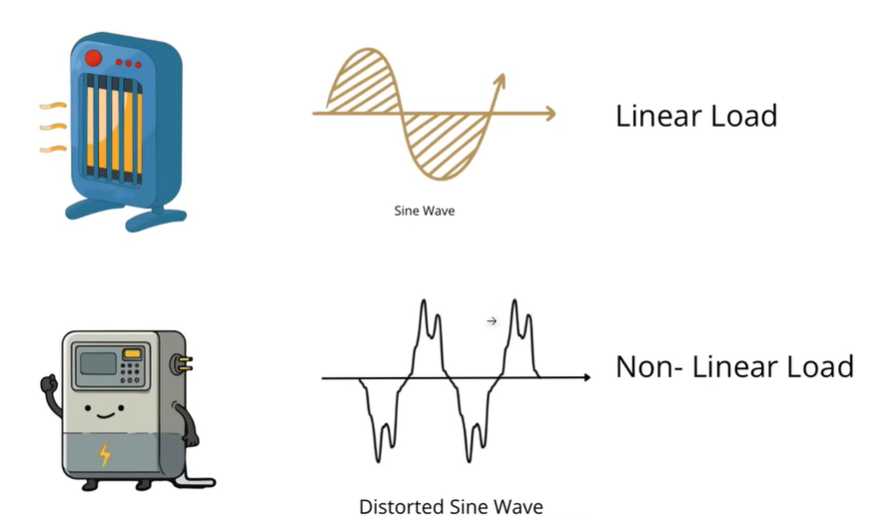
Such devices are called nonlinear loads. Their current waveform becomes distorted. Voltage may remain sinusoidal, but current does not. This mismatch creates harmonics. Nonlinear loads are the main cause of harmonics. Understanding them is critical for power quality management.
What Are Harmonics in Electrical Systems
With the basic concepts clear, we can now understand harmonics. In traditional power plants, generators produce nearly perfect sine waves. Transmission systems also maintain good waveform quality. Distortion remains very low.
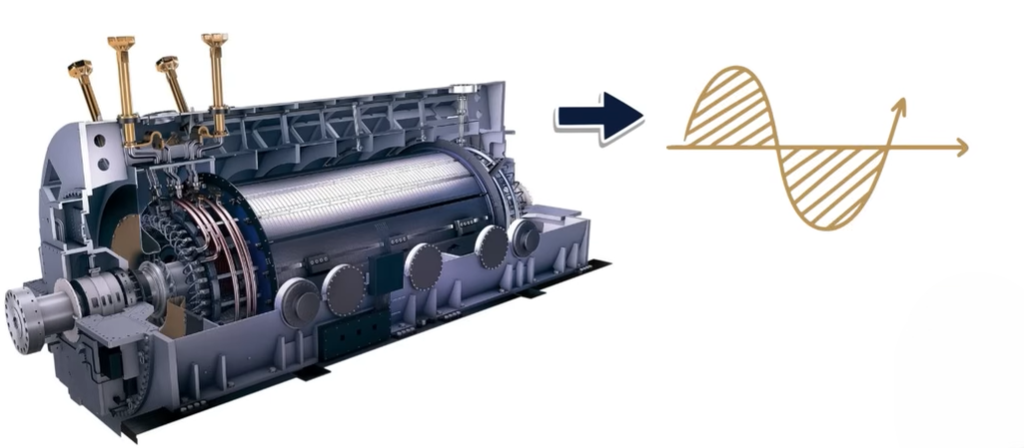
However, the situation changes at the distribution level. When power reaches customers, nonlinear loads dominate. As a result, current waveforms become highly distorted. Because of this, harmonics mainly affect distribution systems and consumers. Utilities usually face fewer problems at present. However, increasing inverter usage may change this in the future.
Harmonics are simply a way to describe waveform distortion. They apply to both current and voltage. When someone talks about harmonics, it is important to ask whether they mean current harmonics or voltage harmonics.
Harmonic distortion is a major power quality issue for customers. It affects equipment performance and system reliability. That is why it deserves serious attention.
Sources of Harmonics in Electrical Systems
Harmonics mainly come from nonlinear devices. These devices draw current in an uneven manner. As a result, they distort waveforms. Common sources include chargers, converters, arc furnaces, and variable frequency drives. Many electronic devices also contribute to harmonic generation.
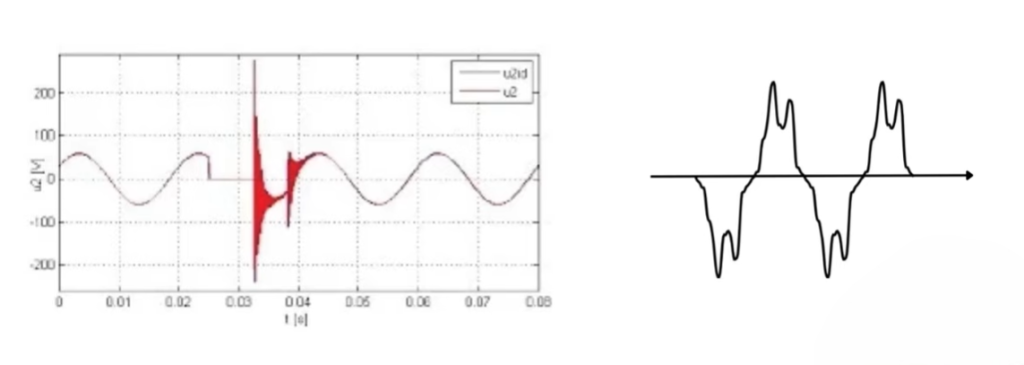
Power conversion systems in battery storage also create harmonics. These systems convert AC to DC and back to AC. During this process, waveform distortion occurs. As renewable energy grows, inverter-based systems increase. This may raise harmonic levels further. Therefore, harmonic management will become more important in the future.
The main root cause remains the same. Nonlinear behavior creates harmonics. Without nonlinear devices, harmonic levels remain low.
Harmonic Analysis Using Fourier Decomposition
Simply observing a distorted waveform is not enough. We cannot judge its severity by sight alone. To understand magnitude and impact, we must analyze it mathematically. Fourier analysis provides this solution. It was developed by a French mathematician. It allows us to break down complex waveforms.
According to Fourier theory, any distorted waveform consists of many sine waves. These sine waves have different frequencies and amplitudes. When added together, they form the distorted waveform. One part is always the fundamental component. This operates at 50 Hz or 60 Hz. Other parts operate at higher frequencies.
These higher-frequency components are called harmonics. They are not separate currents. They are parts of the same waveform. When we examine these components, we notice faster cycling. Their frequency is higher than the fundamental. That is why they are classified as harmonics.
Harmonic Orders and Their Meaning
The fundamental component is called H1. This is the desired part of the waveform. It carries useful power. The third harmonic is three times the fundamental frequency. At 50 Hz, it becomes 150 Hz. The fifth harmonic becomes 250 Hz. Similarly, higher orders exist.
Harmonics always occur at integer multiples of the fundamental frequency. Examples include third, fifth, seventh, ninth, and fifteenth harmonics. These components distort the original waveform. The more harmonics present, the worse the distortion becomes.
How Harmonics Are Generated: A Practical Example
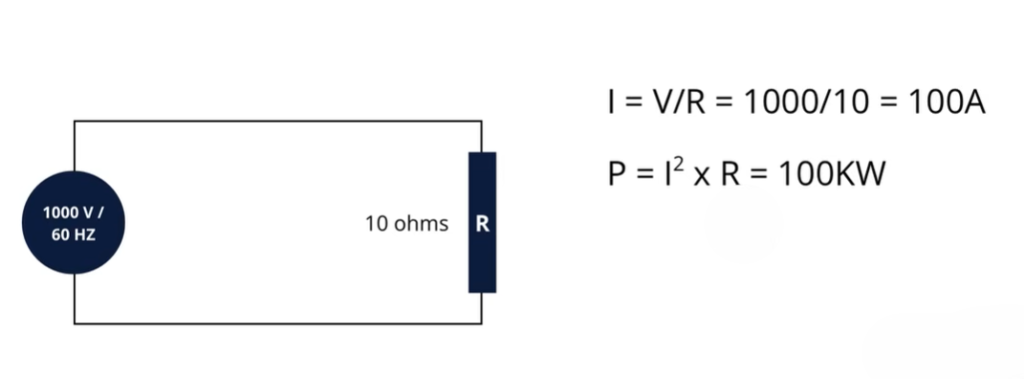
To understand harmonic generation, consider a simple circuit. It has an AC source and a resistor. Initially, it behaves normally. Current follows voltage. Power flow is stable.
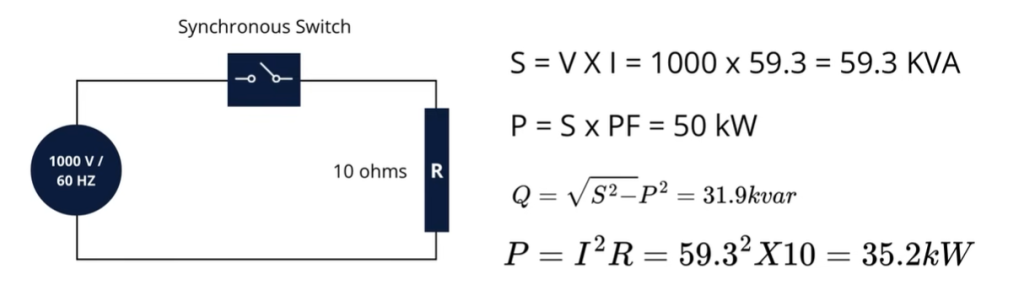
Now, imagine adding a synchronous switch. This switch allows current only during half cycles. During the remaining time, it blocks current. As a result, the current waveform becomes distorted. It no longer follows a sine wave. Power reduces by half.
When this distorted waveform undergoes Fourier analysis, several components appear. The voltage remains sinusoidal. The current splits into fundamental and harmonic parts. Surprisingly, current begins to lag voltage. This happens even though the circuit is resistive. Normally, resistive circuits have no phase shift.
This phase shift introduces reactive power. Power factor reduces. Apparent power increases. Active power remains limited. Reactive power appears due to harmonics. It does not come from inductors or capacitors. It comes from waveform distortion.
Some active power converts into harmonic power. This power causes extra heating. It returns to the resistor. The switch cannot consume it. Thus, harmonics change system behavior completely. A simple resistive circuit starts behaving like a complex one. The nonlinear switch acts like a frequency converter. It changes current frequency without changing generator speed. This explains harmonic creation.
Impact of Harmonics in Electrical Systems
Harmonics affect many parts of the system. Their impact is serious and wide-ranging.
Major effects include:
- Equipment overheating
- Reduced system efficiency
- Poor power factor
- Premature device failure
- False tripping of breakers
- Interference with electronics
- Communication disturbances
- Neutral conductor overloading
Overheating occurs due to extra losses. Windings and cables heat up. Insulation life reduces. Poor power factor increases utility charges. Customers may face penalties. Operating costs rise.
Sensitive devices may malfunction. Computers and laboratory equipment may fail. Production quality may suffer. Neutral conductors carry triplen harmonics. If undersized, they overheat. This creates fire risk.
Harmonics vs Transients in Electrical Systems
Not all distortions are harmonics. Some are transients. It is important to distinguish them. Harmonics are steady-state distortions. They repeat continuously. The same pattern appears every cycle. Transients are short-term events. They last for milliseconds. After that, the waveform returns to normal. If distortion repeats regularly, it is harmonic. If it appears briefly and disappears, it is transient. Understanding this difference helps in correct diagnosis.
Special Types of Harmonics
Triplen Harmonics
Triplen harmonics are odd multiples of the third harmonic. Examples include third, ninth, fifteenth, and twenty-first. These harmonics accumulate in the neutral conductor. They cause serious overheating. Therefore, they need special attention.
Interharmonics
Interharmonics are not integer multiples. Their frequency may be 1.5 or 2.3 times the fundamental. They occur less frequently. However, they still cause distortion. When present, they create complex problems.
Summary of Harmonics in Electrical Systems
Harmonics represent waveform distortion. They affect both voltage and current. However, not all distortions are harmonics. Fourier analysis breaks distorted waveforms into components. These components operate at multiples of fundamental frequency.
Nonlinear devices are the main cause. Their current drawing behavior creates distortion. Harmonics lead to overheating, efficiency loss, low power factor, and early failures. They also disturb sensitive equipment.
Neutral conductors face high stress due to triplen harmonics. This increases safety risks. Harmonics cannot be eliminated completely. However, they can be reduced with proper design and filtering.
Conclusion
Harmonics in electrical systems are unavoidable in modern networks. They arise mainly from nonlinear loads and power electronic devices. Over time, they affect equipment health, energy efficiency, and operating cost.
Understanding frequency, waveform distortion, and nonlinear behavior helps in identifying harmonic problems. Fourier analysis explains how distorted waves contain multiple frequency components. Practical examples show how harmonics change circuit behavior.
Monitoring harmonic levels is essential for customers. Early detection prevents overheating, failures, and financial losses. Proper awareness improves power quality management.
For better understanding, visual explanations are very helpful. Watching the referenced video will provide clearer insight into waveform behavior and harmonic analysis.

