


Why Induction Motors Fail: 5 Common Causes and Prevention Tips
Why Induction Motors Fail: 5 Common Causes and Prevention Tips https://www.theelectricalguy.in/wp-content/themes/corpus/images/empty/thumbnail.jpg 150 150 Gaurav Joshi https://secure.gravatar.com/avatar/f6a3006f3f7233a71d79d0e705c167ae12516870e5239627478665ae377435b3?s=96&d=mm&r=gInduction motors are the backbone of modern industry. They power pumps, fans, conveyors, and compressors every day. However, many failures are not sudden. They build up over time due to small, ignored issues. This is where understanding the induction motor failure causes becomes critical.
Picture a real situation. A motor trips at night, and production stops instantly. The loss keeps growing every hour. Later, you find the motor is burned out. The worst part is that the warning signs were already there. Most failures follow a pattern, and most can be prevented.
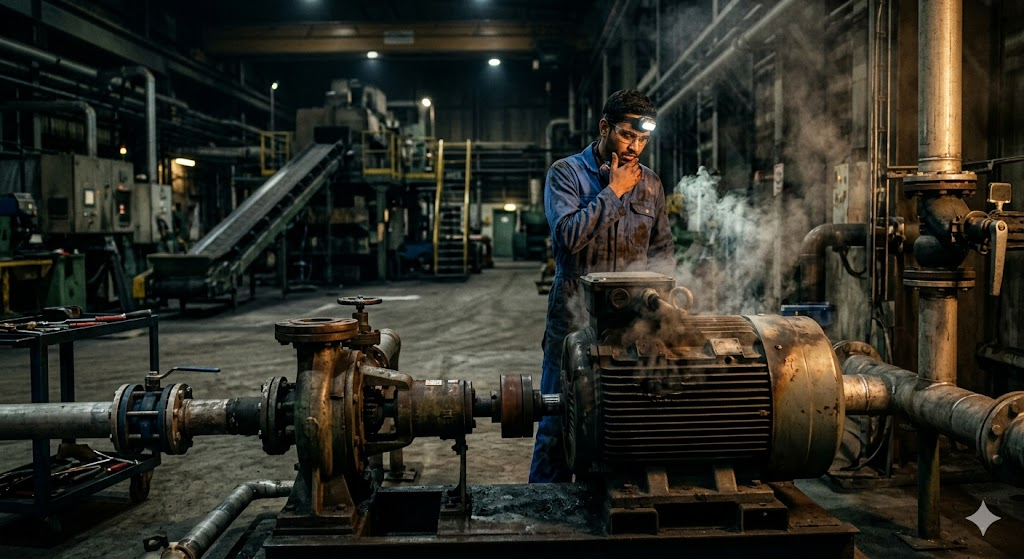
Studies show that nearly 70% of industrial electricity powers induction motors. They are strong and reliable. Still, they are not immune to failure. In fact, most breakdowns happen due to a few common reasons. Let us understand them one by one.
Table of Contents
- Bearing Failure in Induction Motors
- Overheating and Insulation Breakdown
- Voltage Supply Problems
- Contamination and Moisture Ingress
- Mechanical Overload and Misalignment
- Additional Insight: Partial Discharge in Motors
- Conclusion
1. Bearing Failure in Induction Motors
The most common reason induction motors fail is bearing failure. It accounts for a large share of breakdowns. Bearings support the rotor and allow smooth rotation. When they work well, you do not notice them. But once they degrade, problems appear quickly.
Several factors cause bearing damage. Poor lubrication is a major one. Too little grease causes friction, while too much creates heat. Contamination also plays a big role. Dust, moisture, and chemicals damage the surface over time. In addition, electrical currents from VFD systems can erode bearings slowly.
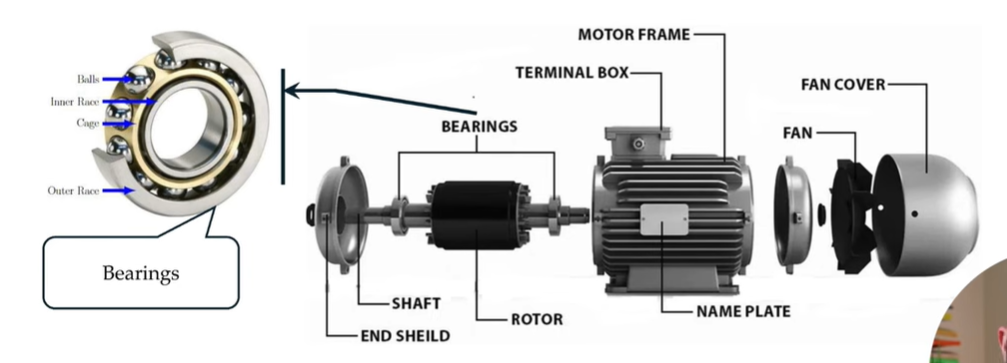
Consider a conveyor motor in a dusty plant. Maintenance gets delayed, and lubrication is skipped. Over time, the bearing runs dry. Heat builds up, and eventually the shaft locks. The motor fails completely.
To prevent this, follow proper lubrication schedules. Also, use insulated bearings in VFD-driven motors. Regular vibration checks help detect early signs. These simple steps can save major costs later.
2. Overheating and Insulation Breakdown
Another major reason is overheating. Heat silently damages motor insulation. Every rise in temperature reduces insulation life significantly. This makes overheating one of the most dangerous issues.
Many factors lead to excess heat. Overloading the motor is a common cause. Blocked cooling vents also trap heat inside. High ambient temperature worsens the situation. Frequent starts and stops add more stress.
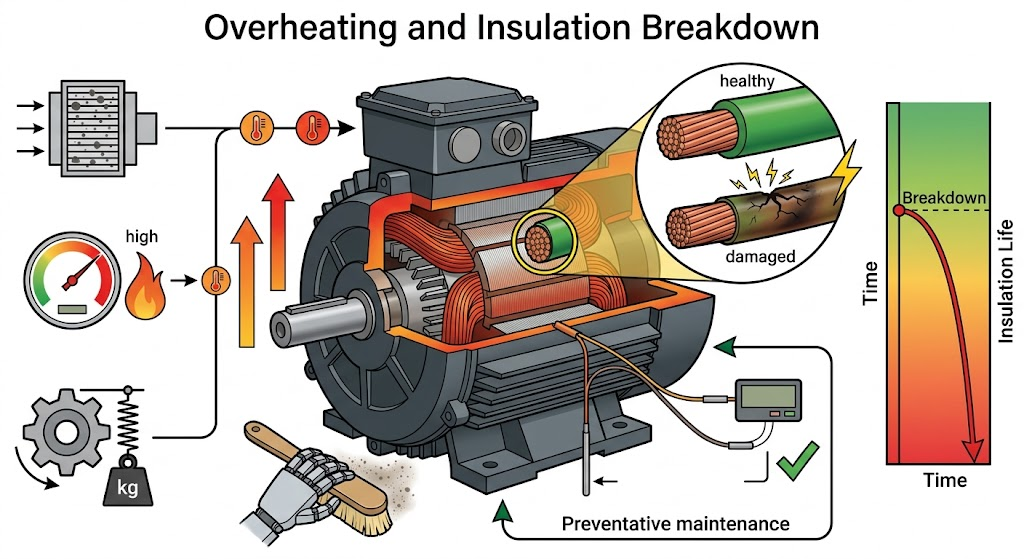
Think about a pump motor that trips every summer. Operators reset it without checking the cause. Over time, repeated heating cycles weaken the insulation. Finally, a fault occurs, and the motor fails.
To avoid this, always monitor temperature conditions. Clean cooling paths regularly. Ensure the motor matches the load requirement. Installing thermal sensors helps track winding temperature. These actions reduce long-term damage.
3. Voltage Supply Problems
Power quality plays a huge role in motor health. Poor voltage conditions can damage motors quickly. Even small variations can lead to serious issues.
One common issue is voltage imbalance. Unequal phase voltage increases winding temperature. This stresses insulation unevenly. Another problem is overvoltage or undervoltage. Motors work harder outside their rated range. This reduces efficiency and increases heat.
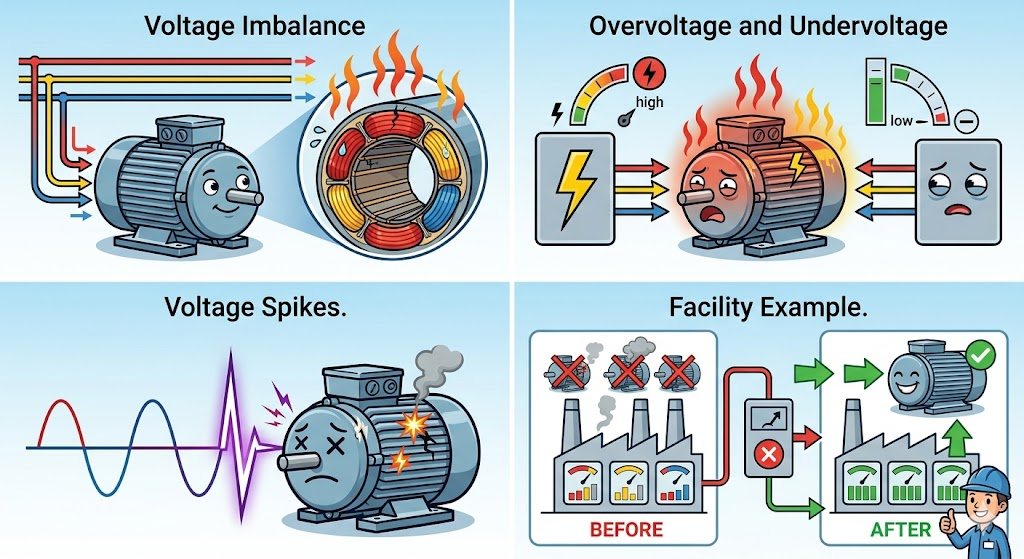
Voltage spikes are also dangerous. They can occur due to switching events or lightning. A single spike may damage insulation instantly.
For example, a facility faced repeated motor failures. Investigation showed phase imbalance in the supply system. Once corrected, failures stopped completely.
To prevent such issues, measure voltage regularly. Balance loads across phases. Use surge protection devices where needed. Monitoring power quality helps avoid unexpected breakdowns.
4. Contamination and Moisture Ingress
Harsh environments can severely affect motor performance. Dust, oil, and chemicals often enter the motor. These contaminants block cooling and damage insulation.
Moisture is even more harmful. Water reduces insulation resistance drastically. This can lead to immediate failure during startup. Motors that remain idle are more vulnerable.
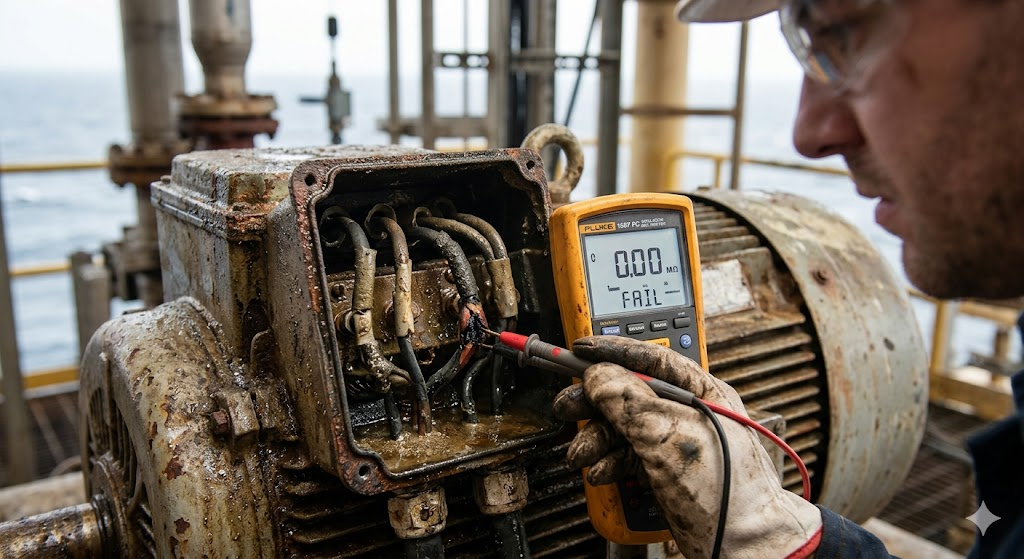
Imagine a standby pump motor on an offshore platform. It stays unused for months. Moisture builds up inside the winding. When started, it fails instantly due to insulation breakdown.
To avoid this, select motors with proper protection ratings. Install anti-condensation heaters where needed. Perform insulation resistance tests before starting idle motors. These steps improve reliability in harsh conditions.
5. Mechanical Overload and Misalignment
Sometimes, the motor is not the problem. The connected load causes the failure. Mechanical issues often go unnoticed until damage occurs.
Misalignment is a common issue. When shafts are not aligned, vibration increases. This puts stress on bearings and seals. Over time, it leads to failure. Mechanical overload is another concern. Excess load increases current and heat.
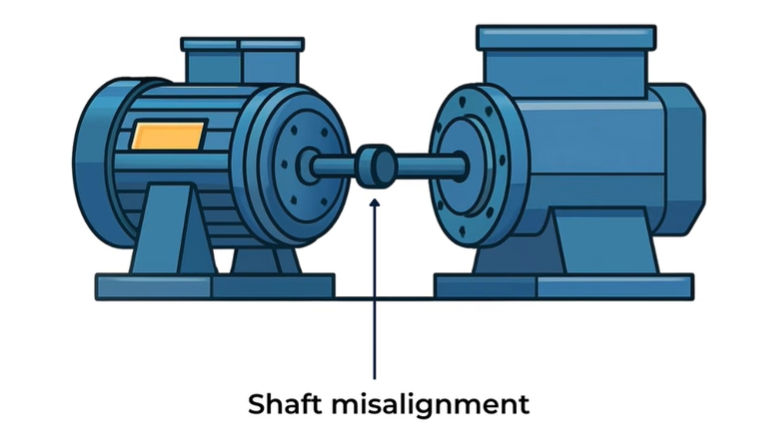
Consider a cooling fan motor that fails repeatedly. Each time, the motor gets replaced. Later, the root cause reveals a worn coupling. It creates imbalance during operation. Once fixed, failures stop.
To prevent such problems, ensure proper alignment during installation. Use precise tools instead of visual checks. Monitor motor current regularly. Any sudden increase may indicate overload. Always investigate repeated failures instead of replacing parts blindly.
Additional Insight: Partial Discharge in Motors
Apart from the main reasons, another factor deserves attention. Partial discharge is a slow insulation damage process. It occurs as tiny electrical sparks inside insulation.
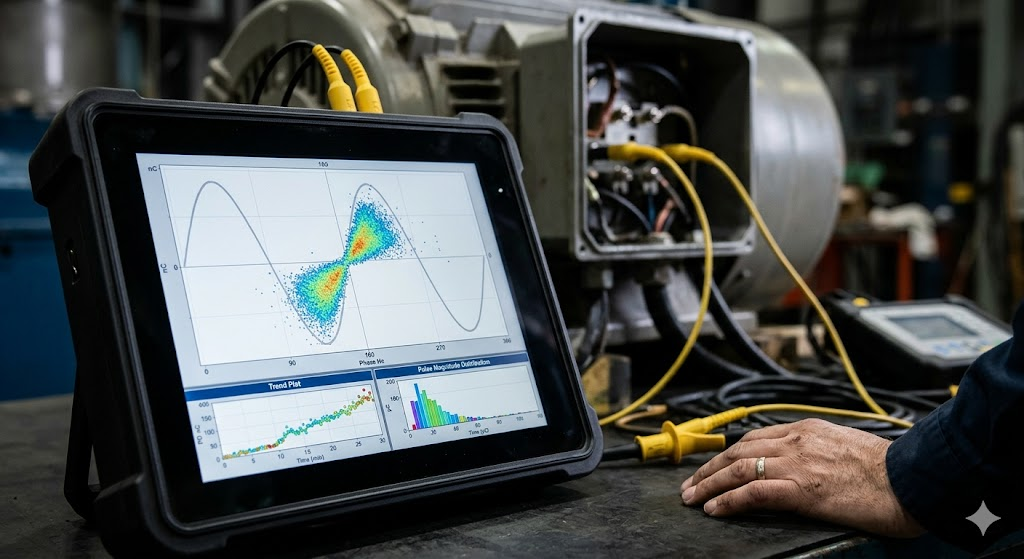
Each spark causes small damage. Over time, these accumulate and weaken insulation. This is more common in high-voltage motors. However, VFD systems can also create similar stress.
In such systems, voltage spikes are frequent. These spikes increase the risk of insulation degradation. Monitoring insulation health becomes important in such cases.
Conclusion
Induction motor failures are rarely random. They follow clear patterns. Most issues develop slowly and give early warning signs. Bearing failure, overheating, voltage problems, contamination, and mechanical issues are the main causes.
The key takeaway is simple. Regular monitoring and preventive maintenance can avoid most failures. Instead of reacting after breakdown, focus on early detection.
For a deeper and more practical understanding, it is recommended to watch the full video explanation.

