


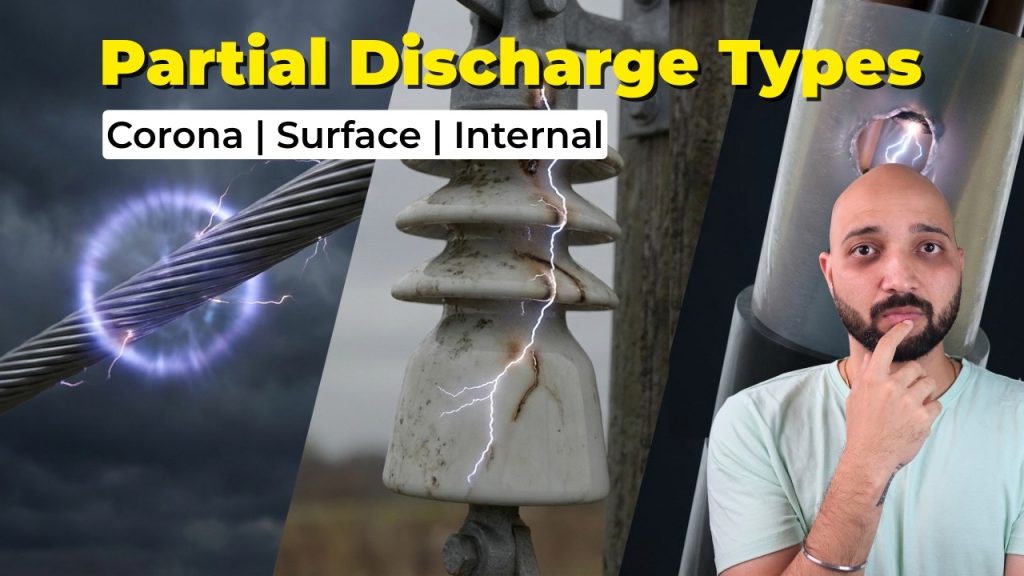
What are The Types of Partial Discharge
What are The Types of Partial Discharge https://www.theelectricalguy.in/wp-content/uploads/2026/04/maxresdefault-1-1024x576.jpg 1024 576 Gaurav Joshi https://secure.gravatar.com/avatar/f6a3006f3f7233a71d79d0e705c167ae12516870e5239627478665ae377435b3?s=96&d=mm&r=gHave you ever seen a transformer fail without any warning signs? It may look healthy one day and fail the next. This is not rare. It happens in real systems.
In many cases, the real cause starts much earlier. It develops slowly inside the insulation. That hidden issue is called partial discharge. So, understanding What are the types of Partial Discharge Types becomes very important.
Partial discharge works silently. It weakens insulation over time. If ignored, it leads to sudden failure. Therefore, knowing its types helps you take action early.
Table of Contents
- What is Partial Discharge in Electrical Systems
- Classification of Partial Discharge Types Explained
- Corona Partial Discharge Explained
- Surface Partial Discharge Explained
- Real Case Study of Surface Partial Discharge
- Internal Partial Discharge Explained
- Detection and Importance of Identifying Partial Discharge Types
- Conclusion
What is Partial Discharge in Electrical Systems
Before learning the types, you must understand the concept clearly. Partial discharge is not a full breakdown. It is only a small discharge inside insulation.
Imagine a water pipe with a small crack. Some water leaks out. However, most water still flows inside. That leakage is not complete failure. It is only partial.
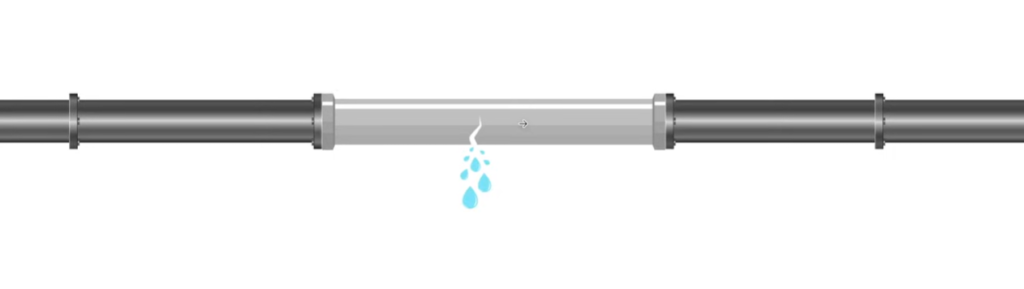
Similarly, in electrical systems, insulation may have weak points. These weak points are:
- Voids
- Impurities
- Manufacturing defects
Because of these, electrical stress concentrates in small regions. Over time, these regions fail locally. That local failure is partial discharge.
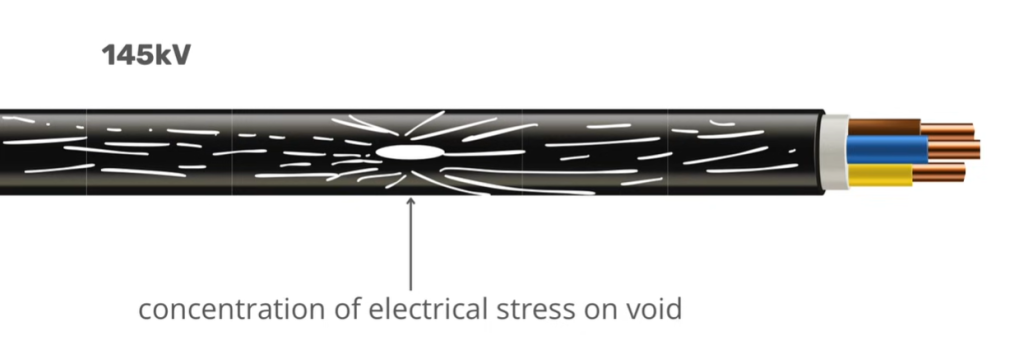
Another simple way to understand this is:
- Think of a wooden beam with termites
- It looks strong outside
- Inside, it is slowly weakening
- One day, it collapses suddenly
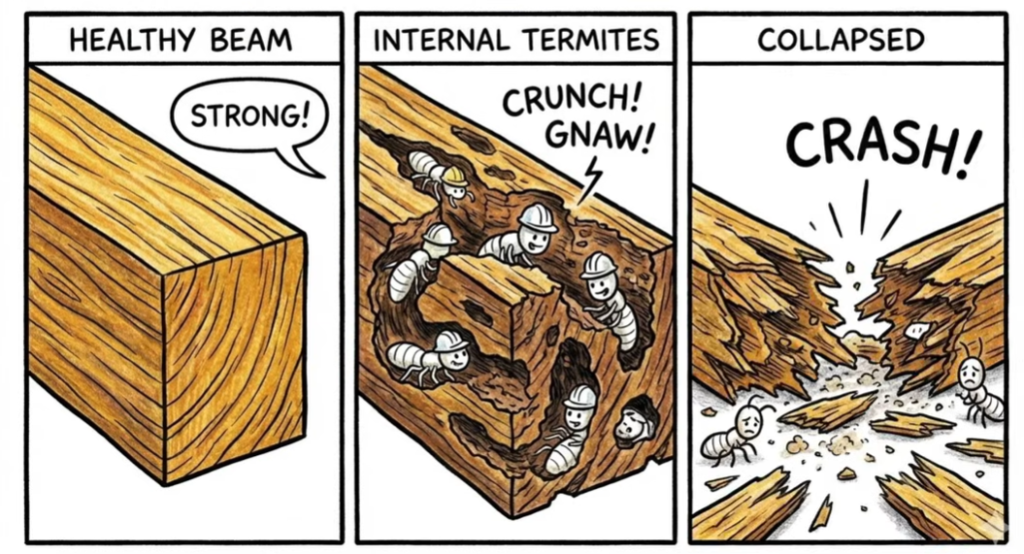
Partial discharge behaves the same way. It weakens insulation silently. Then failure happens without warning.
Classification of Partial Discharge Types Explained
Now let us move to the main topic. Partial discharge is broadly divided into two main categories.
- External Partial Discharge
- Internal Partial Discharge
Further, external partial discharge has two types:
- Corona discharge
- Surface discharge
So, in total, we study three major types:
- Corona partial discharge
- Surface partial discharge
- Internal partial discharge
Each type behaves differently. Also, each type needs a different solution.
Corona Partial Discharge Explained
Let us start with the least dangerous type. Corona partial discharge is easier to detect.
If you walk near high voltage lines, you may notice:
- A hissing sound
- A faint violet glow
That glow is corona discharge.
This type usually occurs in:
- Extra high voltage transmission lines
- Outdoor substations
- Equipment with sharp edges
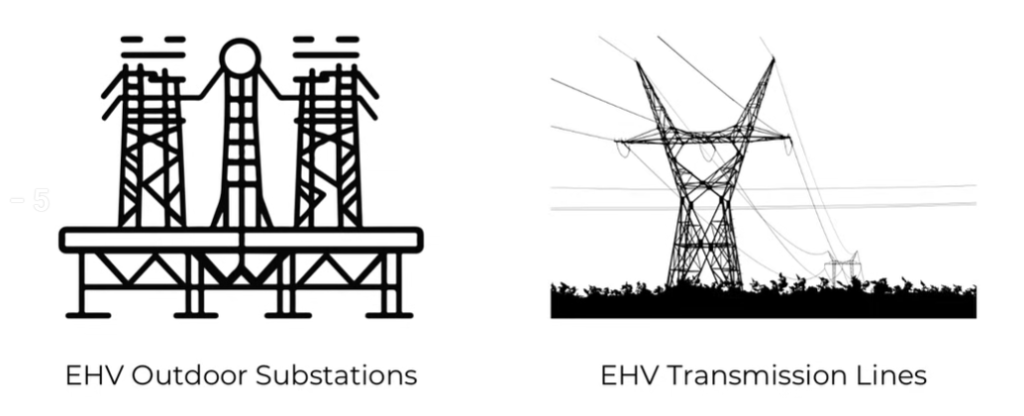
Now let us understand why it happens.
When voltage is applied to a conductor, an electric field forms. The field becomes stronger near sharp edges. As voltage increases, air around the conductor starts breaking down.
Air is not a perfect insulator. It contains free electrons. These electrons get energized and cause discharge. That discharge appears as a glow.

The voltage at which this starts is called:
- Corona inception voltage
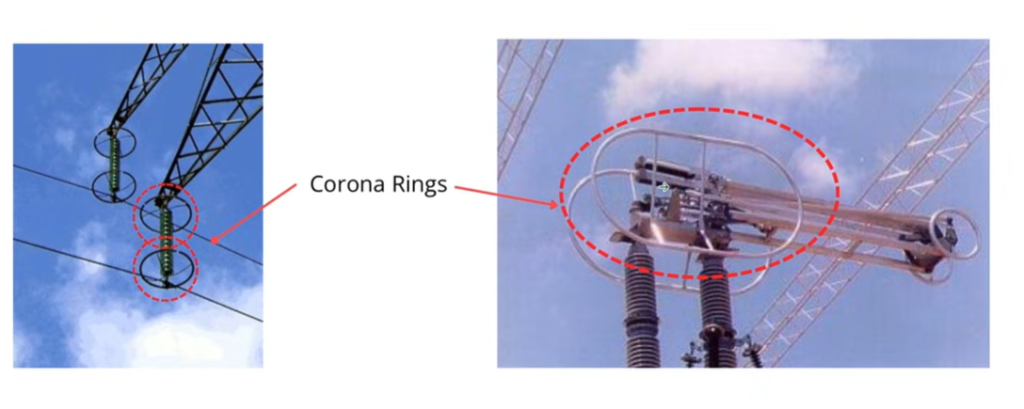
To control corona, engineers use simple methods:
- Use corona rings
- Avoid sharp edges
- Use bundled conductors
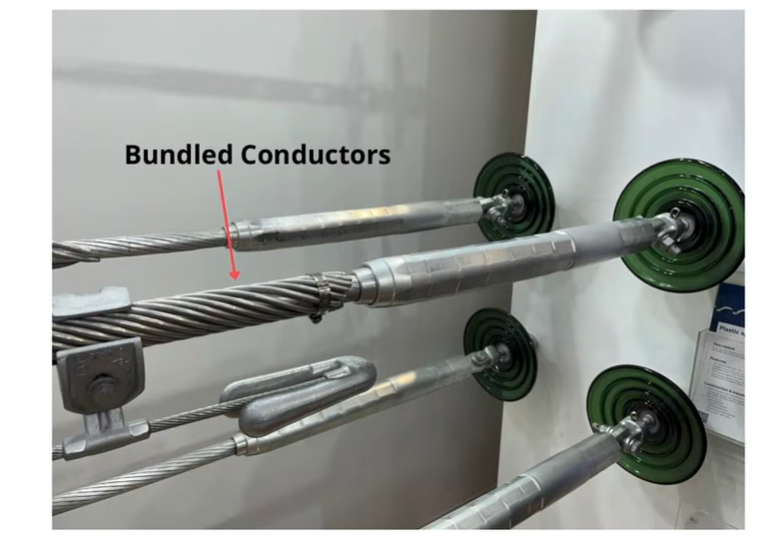
Corona rings smoothen the electric field. This reduces stress concentration.
However, corona is not harmless. It causes:
- Power loss
- Radio interference
- Ozone formation
- Insulation degradation
Still, the good part is detection is easy:
- You can hear it
- You can see it
So, quick action is possible.
Real Case Study of Surface Partial Discharge
To understand surface partial discharge better, let’s look at a real-world example.
A pharmaceutical company in the UK was operating multiple dry-type transformers. These transformers had ratings like 1.6 MVA and 2 MVA. The environment was ideal. Temperature and humidity were well controlled.
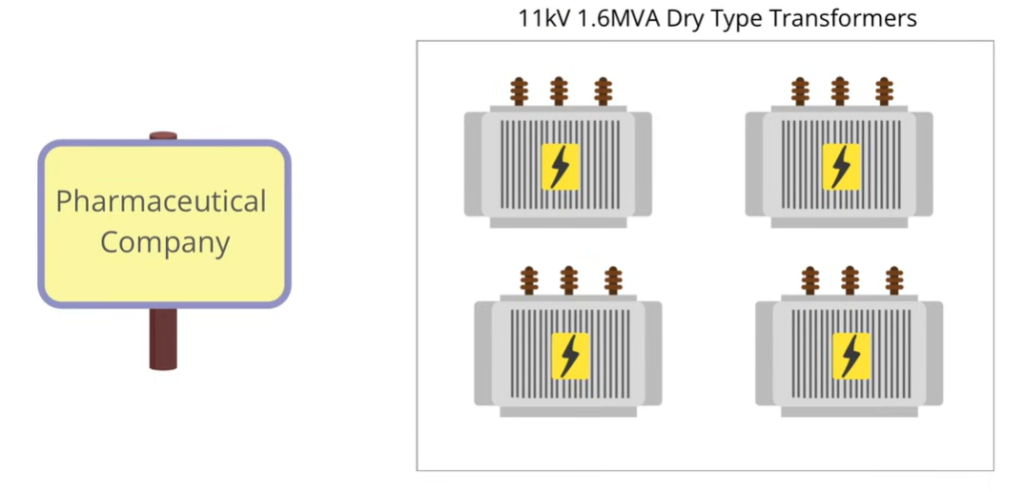
As part of routine maintenance, they performed online partial discharge monitoring. A portable handheld device was used for testing. Most transformers showed normal readings. However, one transformer showed unusually high PD activity.
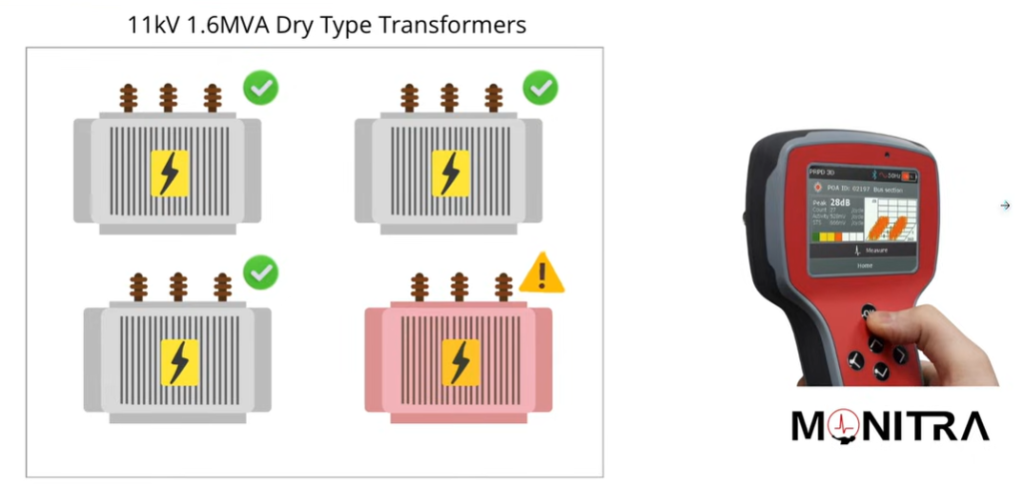
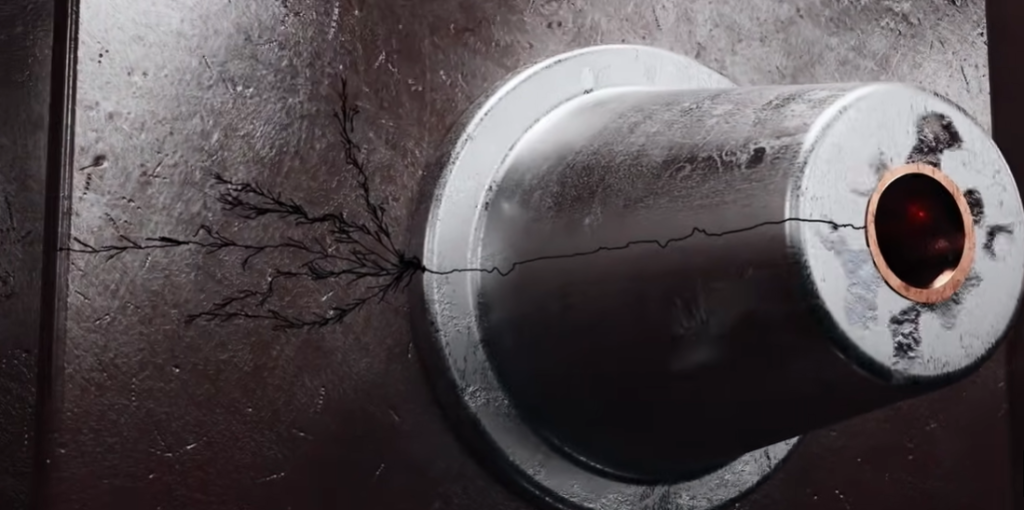
The team decided to take that transformer out of service. On inspection, they found abnormal marks on one of the bushings. When examined closely, the surface showed tree-like conductive paths.
These marks were not random damage. They were caused by surface partial discharge.
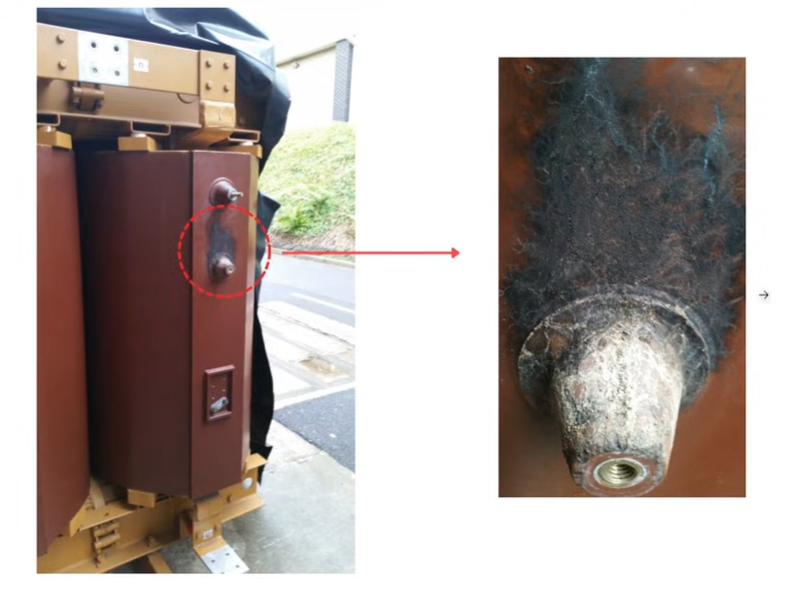
Further analysis revealed the root cause:
- Moisture presence
- Aging insulation (around 23 years old)
Interestingly, the same transformer had shown no issues just six months earlier. This shows how fast surface PD can develop.
Because the issue was detected early, a major failure was avoided. Otherwise, it could have led to:
- Flashover
- Transformer damage
- Plant shutdown
This case clearly proves that surface partial discharge gives warning signs. But only if you actively monitor the system.
Surface Partial Discharge Explained
Now let us move to a more serious type. Surface partial discharge is more dangerous than corona.
This type occurs on insulation surfaces. It creates visible damage over time.
A real example explains it better. In one case, a transformer showed high partial discharge activity. When inspected, the surface had:
- Conductive tracking
- Tree-like patterns
This was surface partial discharge.
Now let us understand why this happens.
Surface PD can occur due to:
- Moisture
- Dust or contamination
- Poor installation
- Aging insulation
- Manufacturing defects
When discharge starts, it creates a small conductive path. Each discharge increases that path. Over time, the path grows.
Finally, it leads to:
- Flashover
- Complete insulation failure
Surface PD is commonly found in:
- Bushings
- Cable terminations
- Dry-type transformers
- Motors and generators
The advantage is that it gives visible signs.
You can detect it by:
- Visual inspection
- Using handheld PD devices
This makes maintenance easier. You can fix issues before failure.
Internal Partial Discharge
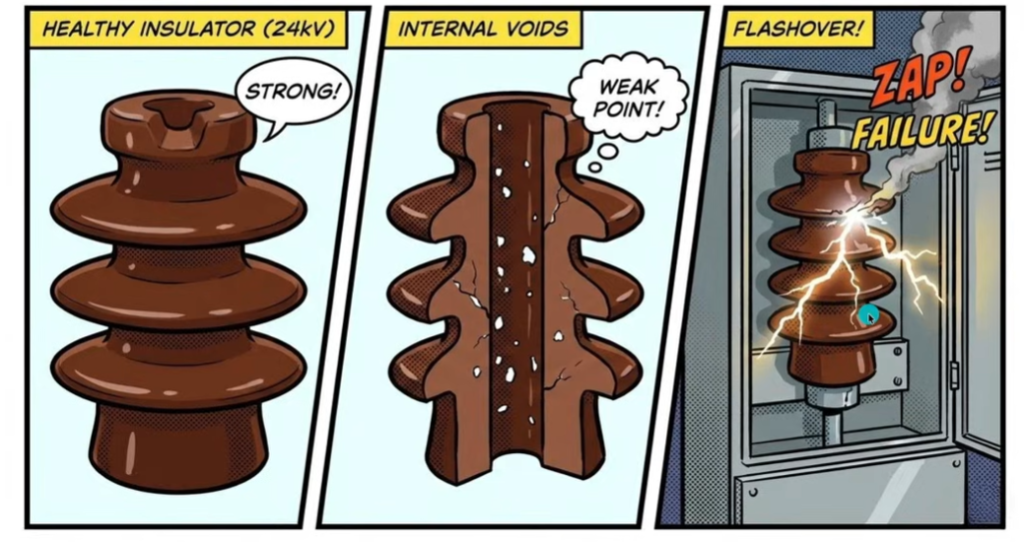
Now let us talk about the most dangerous type. Internal partial discharge is called the silent destroyer because it gives no warning signs. There is no sound, smell, or visible indication, which makes it highly risky in real systems.
This discharge occurs inside insulation due to voids, impurities, defects, or aging. Although the insulator looks fine outside, weak spots exist internally. When voltage is applied, electrical stress concentrates at these points. Since voids have lower resistance, their dielectric strength weakens and local discharge begins.
Over time, repeated discharges damage the insulation further. The process continues silently until the insulation fails completely. This results in sudden and unexpected breakdown without any prior warning.
To understand the impact better, consider these examples:
- Sudden equipment failure:
Internal PD can cause unexpected breakdowns in critical equipment without any prior signs. - Transformer damage:
It can weaken winding insulation, leading to complete transformer failure. - Motor and generator issues:
Internal discharge inside windings can reduce performance and cause shutdown. - Substation outages:
Failure of a single component can disrupt the entire system operation.
The consequences of such failures can be severe. They often result in equipment damage, system shutdown, and heavy financial losses. Since there are no early visible signs, detection becomes very difficult.
That is why monitoring plays a crucial role. Proper partial discharge monitoring helps identify issues before they turn into catastrophic failures.
Detection and Importance of Identifying Partial Discharge Types Explained
Understanding What are the types of Partial Discharge helps in choosing the right solution.
Each type needs a different approach:
- Corona → visual and audible detection
- Surface → inspection and handheld tools
- Internal → advanced sensors
Common detection methods include:
- Coupling capacitors
- HFCT sensors
- PRPD pattern analysis
These methods help identify the source. Once identified, proper maintenance can be planned.
Correct identification helps:
- Prevent failures
- Improve system reliability
- Reduce downtime
Conclusion
Partial discharge is a hidden threat in electrical systems. It may not show early signs. Still, it can cause serious damage.
In this guide on What are the types of Partial Discharge, we covered all major types. Each type behaves differently. Each requires a different solution.
Therefore, early detection is key. Proper monitoring can save equipment and cost.
For better clarity and visual understanding, it is always helpful to watch the full video explanation.

